
- Not Available
Clearance Up to 30% Off
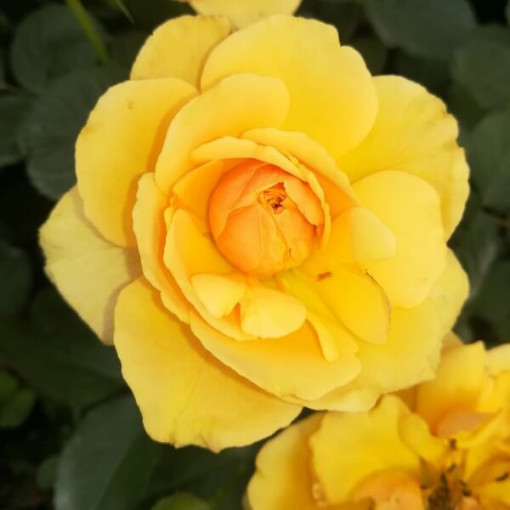
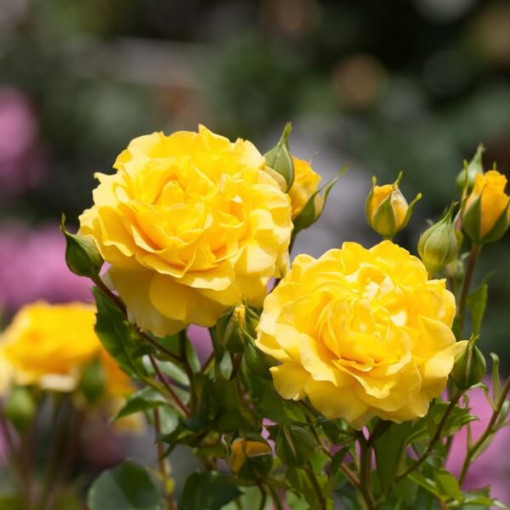
A proven and very reliable variety of climbing roses with beautiful yellow flowers. It remains the most frequently sold variety of yellow roses, even though it was bred over sixty years ago. As a climbing rose, it grows up to about 3 meters high. A characteristic feature of this variety is the yellow-golden flowers, over 12 cm in diameter, that repeat blooming from June to September. These bushes prefer clayey-sandy soil with a high humus content, pH 6.5.
A proven and very reliable variety of climbing roses with beautiful yellow flowers. It remains the most frequently sold variety of yellow roses, even though it was bred over sixty years ago. As a climbing rose, it grows up to about 3 meters high. A characteristic feature of this variety is the yellow-golden flowers, over 12 cm in diameter, that repeat blooming from June to September.
Maturation and fruiting – not applicable.
Conditions and requirements – the variety requires sunny or semi-shady positions. In very shaded places, it blooms very poorly. The Golden Showers rose is low-maintenance. For strong growth and abundant flowering, it needs moist, well-fertilized soil. Fertile garden or humus soils work well. The ideal soil pH for the plant is between 6.4 and 7.5. This means that roses can be planted in slightly acidic, neutral, or slightly alkaline soil.
Care – the climbing rose should be planted 20 cm away from a support, which the plant will climb to protect the roots from drying out. The planting density of the plants should range from 60 cm to 1 meter apart. Rose shoots can climb a pergola or tree, clinging to the thorns. However, they often require tying the shoots to the support.
The climbing variety should be pruned heavily every year, removing faded shoots and thin, long branches growing at the base of the bush. To encourage branching, it is recommended to shorten some of the two-year-old shoots by half. This will stimulate the plant to grow faster and produce new shoots.
The variety is resistant to diseases and low temperatures down to -30°C. It grows well in Polish conditions. Young specimens may require mounding at the base of the bushes and covering the shoots in winter.
Use – As a richly blooming climbing plant, it works perfectly on various supports, trellises, pergolas, or against a building wall or fence. It creates dense green walls in these places. The variety can also be planted in containers, making it an ornament for balconies and terraces.