
Clearance Up to 30% Off
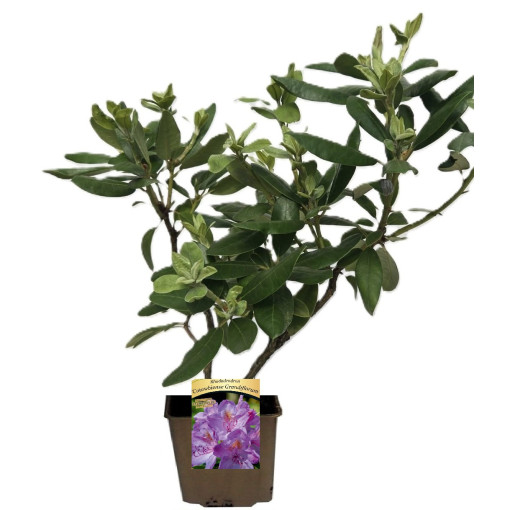
The Azalea Catawbiense Grandiflorum belongs to the group of large-flowered shrubs. It is evergreen, with a wide and spreading habit, and a compact, spherical, slightly flattened shape. The shrub’s shoots are upright with a strong structure, adapted to support large flower clusters. A fast-growing variety, a few-year-old plants can reach a height of up to 3-4 meters and a width of up to 5 meters. This shrub is particularly recommended due to its high resistance to diseases and complete frost resistance. Rhododendrons are planted in slightly shaded, wind-sheltered locations. They should be planted in acidic, humus-rich, and well-drained soil. Rhododendrons are planted in spring and watered regularly.
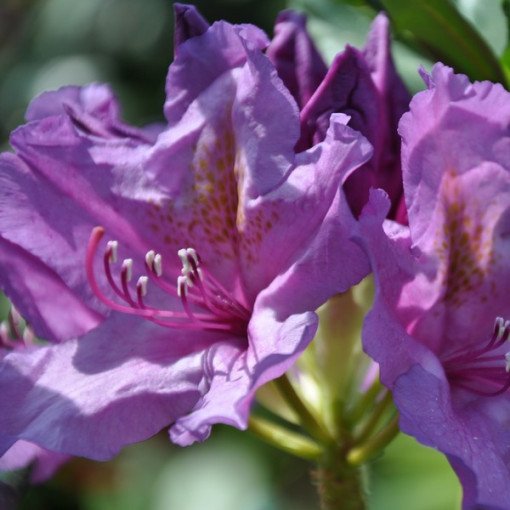
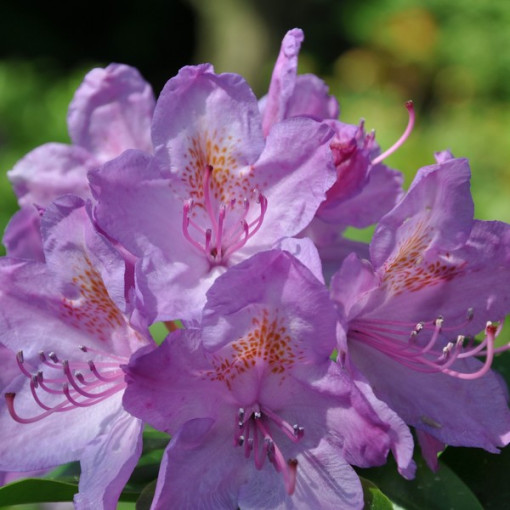
Blooming – the blooming period lasts from the end of May to the second half of June. Large flowers with light violet color, featuring a characteristic yellow-brown to reddish-brown, olive-yellow hue with a spotted pattern. The petals have slightly wavy edges, are quite large, and measure from 5 to 7.5 cm in diameter. The stamens' filaments are the same color as the petals, while the style is darker. The flowers are gathered in dense, spherical inflorescences with a diameter of 13 to 15 cm. The bush's leaves are long elliptical, dark green, slightly glossy, measuring 10-13 cm in length and 3.5-4.5 cm in width. The leaves remain on the branches for many years.
Growing conditions and requirements – Catawbiense Grandiflorum requires semi-shaded or shaded positions with high air humidity. It is important that the planting sites are sheltered from the wind. It prefers acidic, moist, and humus-rich soils.
Care – when planting, choose young, lush, and densely foliaged shrubs. The best time to plant is in April or at the turn of September and October.
Like all rhododendrons, the Catawbiense Grandiflorum variety has very delicate roots and a small, compact root ball. This makes it possible to transplant it even during the blooming phase.
In shrub cultivation, the most important tasks are mulching and weeding. A thick layer of spread bark, acidic humus, or leaf mold will protect the plant from weed development. Any weeds that appear should be removed manually to avoid damaging the shrub's shallow roots. Rhododendrons require constant moisture in the soil, so regular watering is essential. The highest water demand occurs during blooming and the development of new leaves.
During the growing season, evening misting of the leaves benefits the plant's condition.
Catawbiense Grandiflorum is a variety with great frost resistance. It withstands temperatures as low as -30°C. However, young shrubs require winter protection.
To give the shrubs a decorative appearance, formative pruning can be done. Prune the shoots at the growth boundary, where characteristic swellings called rings appear. Due to its strong growth and compact shape, even older shrubs can regenerate quickly after pruning.
Uses – Due to its aesthetic qualities and low requirements, Rhododendron Catawbiense Grandiflorum is perfect for naturalistic plantings in parks and gardens.
This variety can be planted as a solitary ornamental plant, next to other, preferably smaller plants. It also works well as an original hedge. Due to its large size, shrubs should be planted at greater distances.