
Clearance Up to 30% Off
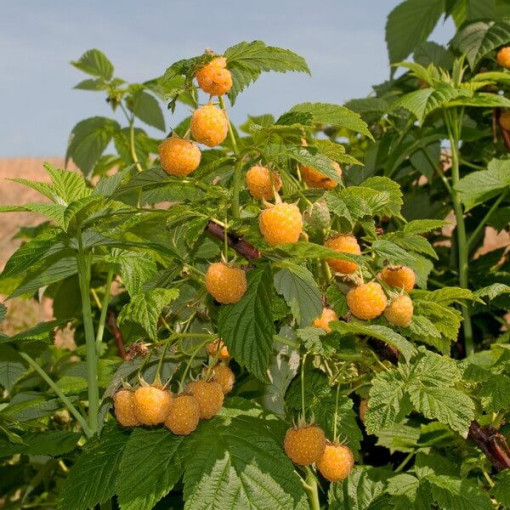
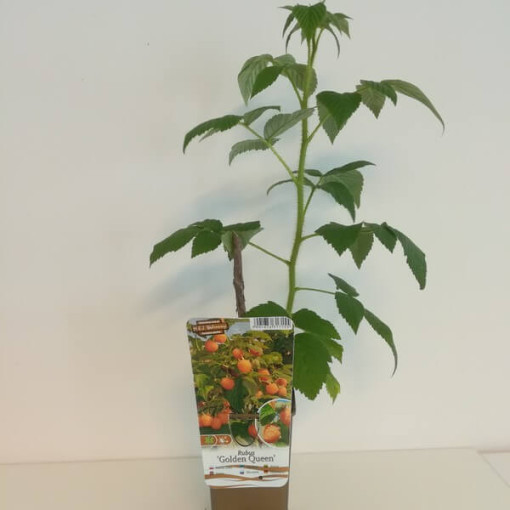
This variety is gaining popularity year by year. It is one of the sweetest autumn raspberry varieties, recommended mainly for amateur cultivation. Yellow raspberry is frost-resistant and more pest-tolerant than other varieties. Grows up to 1.5 m. Especially recommended for fresh consumption. This variety bears fruit twice a year – in summer and autumn. Prefers sunny or slightly shaded spots and fertile, moderately compact soil with a slightly acidic pH (5.5–6.8).
This is a variety that is gaining popularity among consumers every year. It is one of the sweetest autumn raspberry varieties. It is recommended by growers mainly for amateur cultivation.
Use: Ideal as a dessert fruit and for all kinds of preserves. The fruit can be used to make jams, juices, purées, compotes, and frozen products. Raspberry fruits are also a valuable nectar source for bees. The plant grows up to about 2 meters. It is frost-resistant and produces several to a dozen stiff, densely leafy shoots covered with a waxy coating and many thorns.
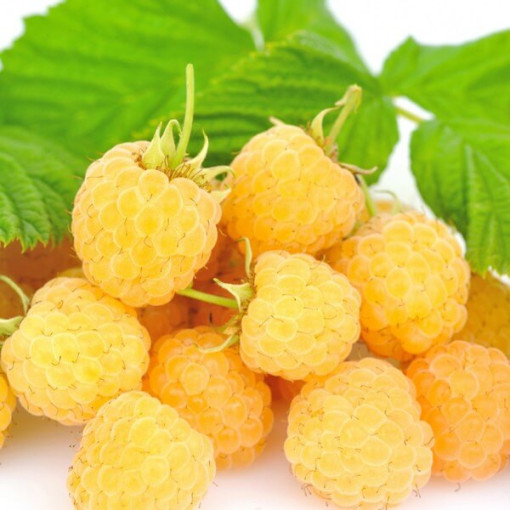
Flowering and fruiting: Flowers are yellow, medium-sized, and bloom from May to August. The fruits are large, spherical, and yellow-orange. The flesh is juicy and very tasty. This variety bears fruit twice a season: in July on last year’s canes and in the autumn, in smaller quantities, on current year’s canes.
Care: Prefers sunny or semi-shaded positions. Soil should be fertile, moist, and acidic. Yellow raspberries are less prone to fruit rot and cane blight. The curled leaves are not a sign of disease, but a natural trait of this variety.
Pruning: Requires heavy pruning. Canes that fruit in July should be cut immediately after harvest to encourage new shoot growth and better autumn yield. Additional maintenance pruning is recommended during the growing season.