
Clearance Up to 30% Off
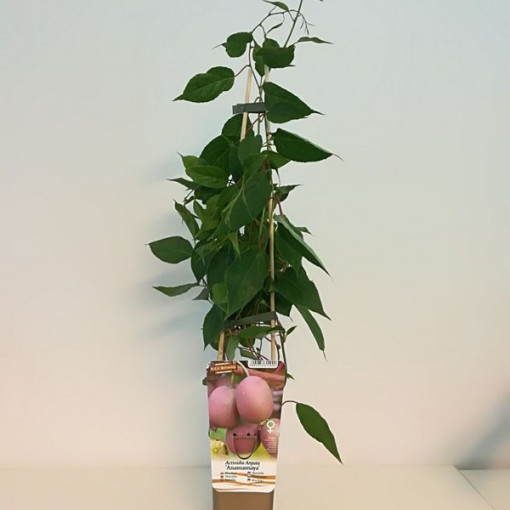
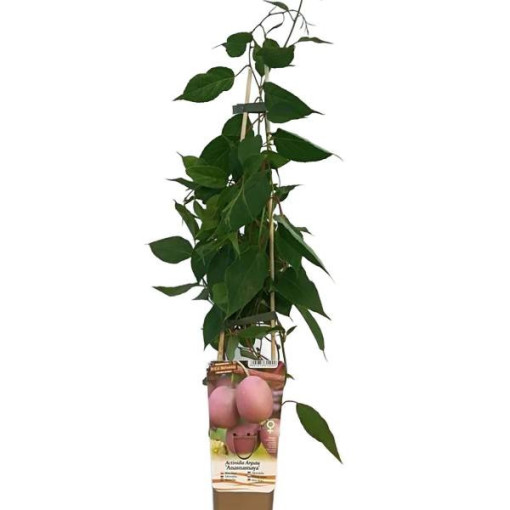
A frost-resistant variety that withstands temperatures down to -28°C. The climber grows up to 5–10 m. The fruits of the sharp-leaved kiwi variety contain vitamin C and iron. For fruiting, this kiwi requires a male variety, e.g., Kiwi Weiki. It prefers sunny, warm positions and fertile soil. The best time to plant mini kiwi is late spring or autumn, but no later than mid-October. Young plants should be protected from frost.
A frost-resistant variety that withstands temperatures down to -28°C. The climber grows up to 5–10 m. The fruits of the sharp-leaved kiwi variety contain vitamin C and iron.
Use: Ananasnaya produces very tasty fruits that can be eaten with the skin. Suitable for preserves. Helpful against colds, flu, and anemia. They can be frozen.
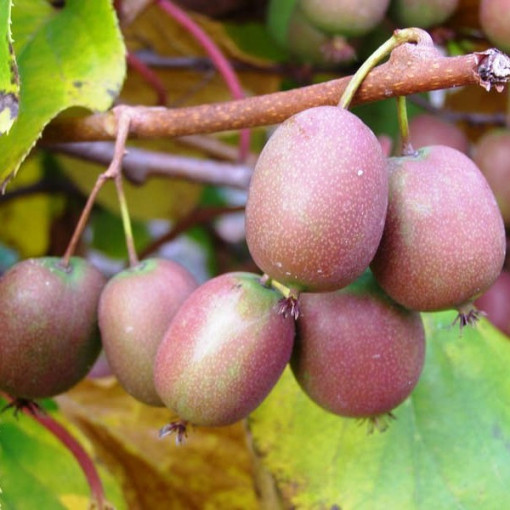
Flowering and fruiting: 'Ananasnaya' starts fruiting 3–4 years after being planted in the ground. It blooms at the turn of May and June, producing white flowers. A male sharp-leaved variety, e.g., 'Weiki', must be planted nearby. The fruits ripen at the beginning of October. They are oval, about 3 cm by 2.5 cm. In sunny spots, they develop reddish-brown blushes. The leaves fall off for winter.
Care: The soil should be fertile, drained, and moist, with a slightly acidic pH. Prefers sheltered, warm, and sunny locations.
Pruning: To increase fruiting, the vine should be pruned at the end of winter or in summer. The first pruning should be carried out five years after planting in the ground.