
- Not Available
Clearance Up to 30% Off
Mini kiwi fruits are a real vitamin bomb! They are also appreciated for their taste and resistance to frost down to -22°C. The climber reaches 8–10 m, with an annual growth of 2–3 m. Prefers warm, sunny, wind-sheltered positions. The soil should be fertile, moist and well-drained. In order to bear fruit, a male pollinator, such as Kiwi 'Weiki', should be planted nearby. The best time for planting is late spring or autumn, but not later than mid-October. Young plants should be protected from frost.
Mini kiwi fruits are a real vitamin bomb! They are appreciated for their taste and resistance to frost down to -22°C. This climber grows up to 8–10 m. Annual growth is 2–3 m.
Use: Actinidia is suitable for both home gardens and commercial plantations. Thanks to its twining stems, it can be planted by pergolas, fences, trellises or arbors. The fruits have a broad health-promoting effect, including antioxidant properties. They help cleanse the body of toxins and are used as a support during colds, flu or other ailments. The fruit can be eaten fresh with the skin, or used for jams, tinctures, dried or pickled.
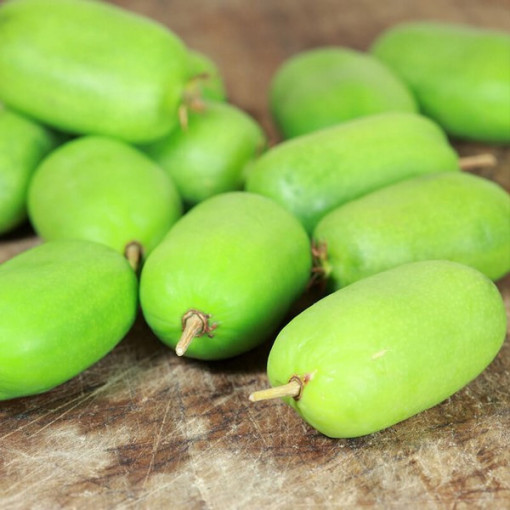
Flowering and fruiting: In June, white, delicate flowers appear. The variety is self-fertile. 'Kokuwa' starts fruiting in the 2nd–3rd year after planting. It ripens between September and October. The ripe, oval fruit is about 2 cm long and 1.5 cm wide, green in color, with smooth edible skin. The taste is slightly lemony. Rich in vitamins (C, E, B) and minerals (sodium, potassium, zinc), as well as pectins and sugars.
Care: Requires a warm, sunny, and sheltered site. Grows best in fertile, moist, well-drained soil.