
Clearance Up to 30% Off
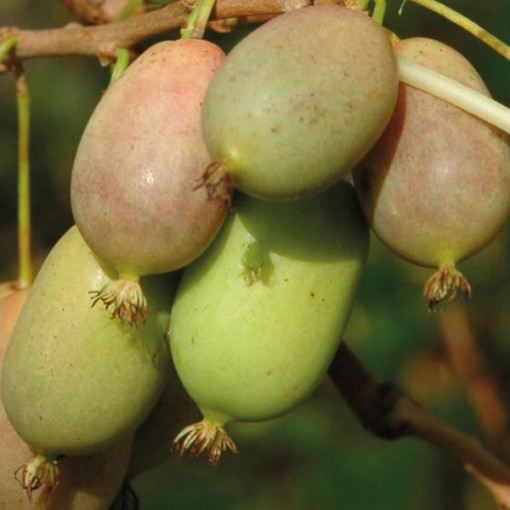
The plant is a cross between A. arguta and A. purpurea. The fruits are medium or large, elongated and laterally flattened, weighing 7–14 grams. The skin is green, and the flesh becomes slightly red when fully ripe (a unique feature). The plant grows up to 3–4 m. It is frost-resistant. It prefers a sunny position and does not have high soil requirements.
It is a female variety with hermaphroditic traits, so it does not require a pollinator. The best planting time for mini kiwi is late spring or autumn, but not later than mid-October. Young plants should be protected from frost.
Actinidia arguta Lucy originates from a cross between A. arguta and A. purpurea. The fruits are medium or large, elongated and laterally flattened, weighing 7–14 grams. The skin is green, and the flesh, when fully ripe for consumption, becomes slightly red (a unique feature).
The fruits are extremely tasty, sweet and slightly tart. They are best consumed when soft and chilled. The plant grows best in a site sheltered from strong winds, with moderately moist (but not wet) soil. The location should be protected from late spring frosts.
In home gardens, it is recommended to train the plant on a trellis. For this purpose, we can use a fence or build a simple support structure from posts and wires. We can also plant it near pergolas or other small garden structures. If we do not have an irrigation system, we must remember to water the mini kiwi Lucy regularly, especially in summer. Actinidia prefers fertile, well-drained soil with a neutral pH of 5.5–6.5.