
Clearance Up to 30% Off
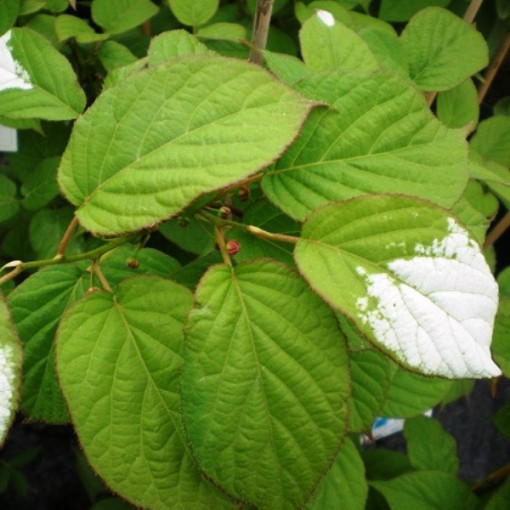
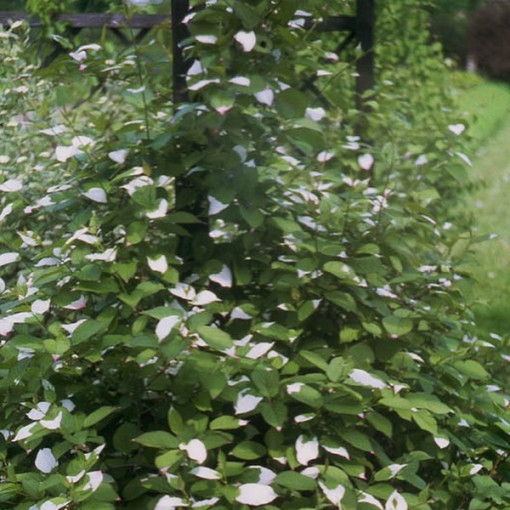
This is a male, Polish variety of kiwi with decorative leaves. They change color in May to white-green and in June to pink. To get fruit, both male and female varieties need to be planted. It grows up to 4m with a yearly growth of 1m. The plant is very frost-resistant. It is a dioecious plant. It prefers both sunny and semi-shaded positions, sheltered from the wind. It tolerates acidic soil. The best time to plant mini kiwi is late spring or autumn, but not later than mid-October. Young plants should be protected from frost.
This is a male, Polish variety of kiwi with decorative leaves. They change color in May to white-green and in June to pink. It originates from the Far East. To get fruit, both male and female varieties need to be planted. It grows up to 4m with a yearly growth of 1m. The plant is very frost-resistant. It is a dioecious plant.
Usage: It should be planted near pergolas, gazebos, walls, etc., as its shoots wrap around them. It can also be planted in containers on balconies and terraces as a visually interesting ornamental climber.
Fruit-bearing and flowering: The leaf discoloration appears 2-3 years after planting. It flowers in May, with small, white, slightly lemon-scented flowers.
Care: Prefers sunny positions. Easy to grow. The soil should be acidic. Resistant to diseases and pests.
Pruning: Prune in late autumn or winter (before the growing season begins), or in summer after the new growth has partially hardened, as the plant "bleeds".