
Clearance Up to 30% Off
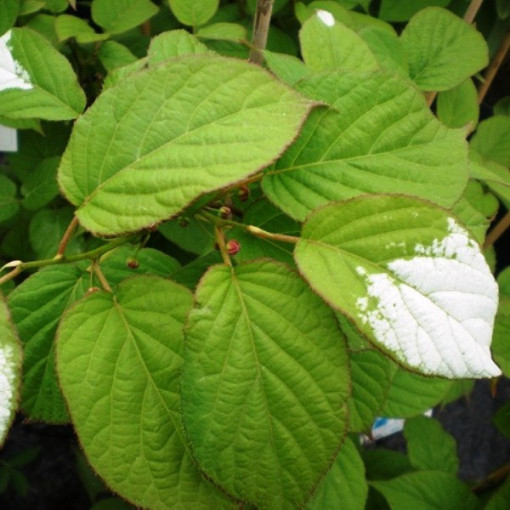
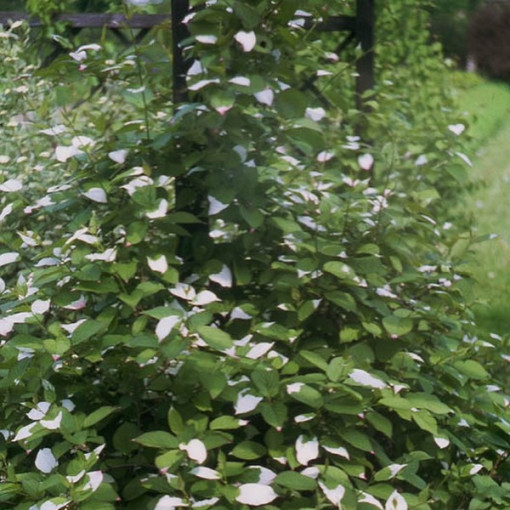
This is a male Polish variety of kiwi with decoratively colored leaves. The leaves change color in May to white and green, and in June to pink. To produce fruit, both male and female varieties need to be planted. It grows up to 4 meters with an annual growth of 1 meter. The plant is very frost-resistant. It is a dioecious plant. Prefers sunny or semi-shaded locations, sheltered from the wind. It tolerates acidic soil. The best time to plant mini kiwi is late spring or autumn, but no later than mid-October. Young plants should be protected from frost.
This is a male Polish variety of kiwi with decoratively colored leaves. The leaves change color in May to white and green, and in June to pink. It originates from the Far East. To produce fruit, both male and female varieties should be planted. It grows up to 4 meters with an annual growth of 1 meter. The plant is very frost-resistant. It is a dioecious plant.
Usage: It should be planted near pergolas, gazebos, walls, etc., as its shoots wrap around them. It can also be planted in containers on balconies and terraces as an ornamental climber with interesting colors.
Fruiting and flowering: Leaf discoloration appears 2-3 years after planting. It blooms in May with small, white flowers that have a light lemon fragrance.
Care: Prefers sunny locations. Easy to grow. Requires acidic soil. Resistant to diseases and pests.
Pruning: Prune in late autumn or winter (before vegetation begins) or in summer after partial lignification of new growth, as the plant "bleeds."