
- Not Available
Clearance Up to 30% Off
Star Magnolia (Magnolia Stellata) is a slow-growing, dense shrub native to Japan. It grows up to 3 meters tall, and its rounded and regular crown reaches a diameter of about 4 meters. It is an ornamental shrub, perfect for small gardens. In spring, it is adorned with flowers, and in autumn, the leaves turn brown. Young shrubs of this variety are very sensitive to frosts, while older plants are characterized by high resistance to low temperatures. Magnolia does not like cold and strong winds, and it needs a sheltered and calm location. It does not tolerate pruning, but old leaves and dried shoots can be removed. The soil should be fertile and slightly acidic.
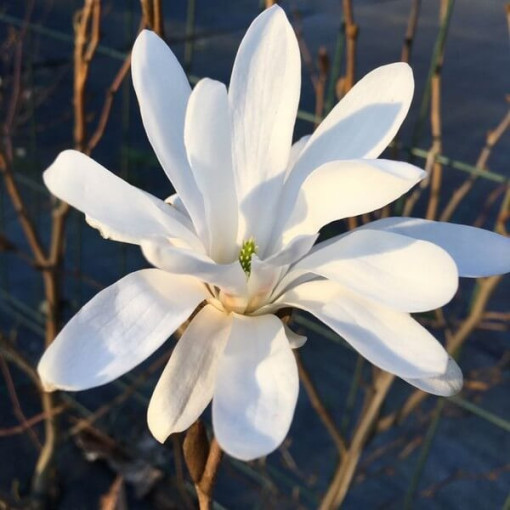
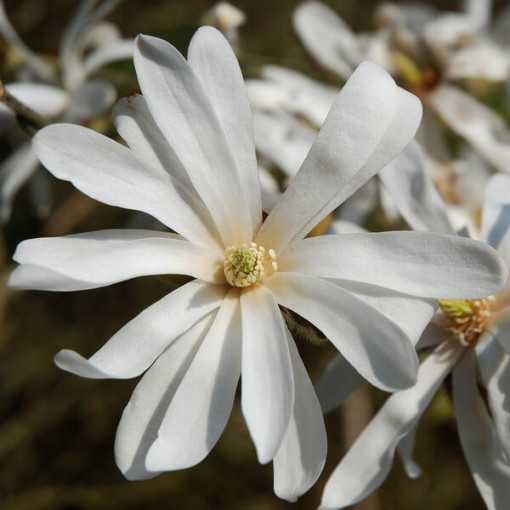
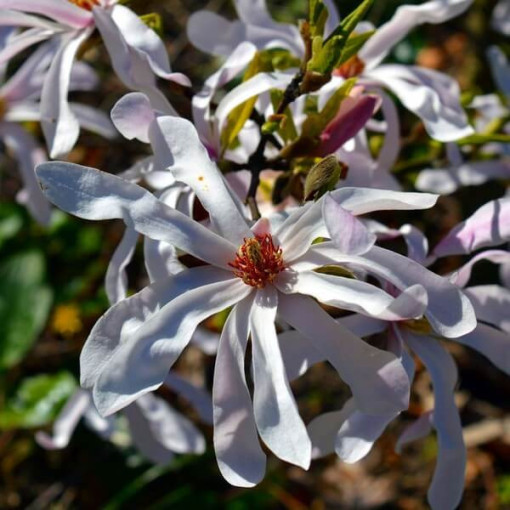
Blooming – this is a variety of magnolia that blooms the earliest. The first flower buds appear in April. Under good weather conditions, blooming may start as early as the second half of March. The flowers are very showy, pure white in color with wide open, numerous, and narrow petals, and a pleasant fragrance.
Maturation and fruiting – not applicable
Growing conditions or requirements – Star Magnolia thrives best in sunny or possibly semi-shaded spots. It is important that it is planted in wind-protected areas. It prefers fertile, moist, and well-drained soils with a slightly acidic pH. It is unsuitable for planting in calcareous soils.
Care – The shrub requires fairly intensive watering from May to July, when its growth is the fastest. The best planting time for the plant is April, as it will have enough time to root well before winter. After planting, the area around the shrub should be mulched with peat and bark. In autumn, it is recommended to increase the thickness of this mulch to protect the roots from freezing.
Star Magnolia is a frost-resistant shrub, but temperatures below -15°C can be dangerous for it, as flower buds may freeze. When temperatures drop below -25°C, entire shoots are at risk. Therefore, the shrubs should be covered with straw or cardboard. This should be done after the first autumn frosts.
In spring, it is necessary to cut out frozen or broken shoots. However, it is important not to overdo it, as magnolia is a shrub that does not like pruning.
Use – Star Magnolia blooms very briefly, so it is good to plant it in a group with shrubs that bloom later. This composition can be complemented with perennials. This variety is suitable as an ornamental plant in parks, botanical gardens, and home gardens.