
- -30%
Clearance Up to 30% Off
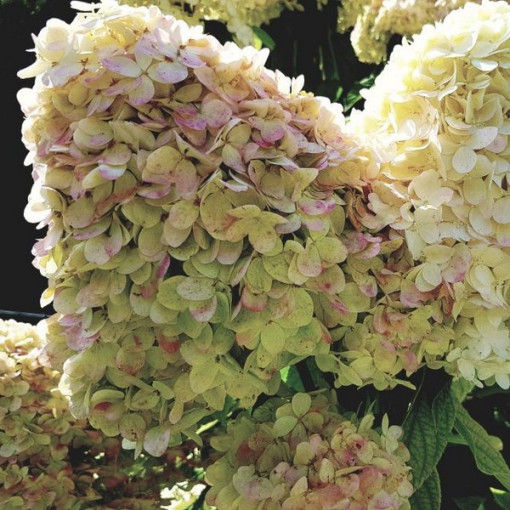
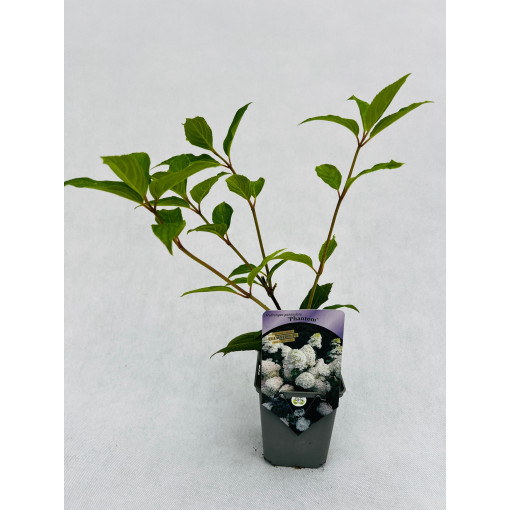
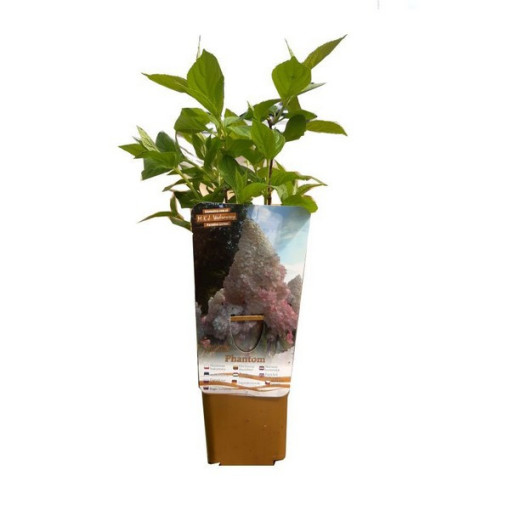
Very ornamental bouquet variety. The shrub, with an upright habit, reaches about 2 m in height and 1.5 m in width. It is characterized by red shoots and beautiful large flowers that can reach up to 40 cm in length. These flowers, initially white, quickly turn pink. The plant is completely frost-hardy. It prefers a sunny, warm or semi-shaded location. The soil should be fertile, rich in humus, and slightly moist.
Phantom hydrangea is a very ornamental bouquet variety. The shrub, with an upright habit, reaches about 2 m in height and 1.5 m in width. It is characterized by red shoots and beautiful large flowers that can reach up to 40 cm in length. These flowers, initially white, quickly turn pink. The plant is completely frost-hardy.
Care and requirements: It prefers a sunny to slightly shaded, wind-sheltered location, and light, humus-rich soil with a slightly acidic pH. It also develops well in average garden soil. Hydrangeas should be planted in as moist a spot as possible, and during drought, they must be watered abundantly. Fertilization—like with most hydrangeas—is best done alternately with acidifying fertilizers.
Blooming: The hydrangea blooms on one-year shoots with very numerous, huge (up to 40 cm) stunning flowers. Initially, they are white, but their color very quickly changes to an intense pink and even red. It blooms very abundantly from July until October. The leaves of this variety are rough, serrated, and green, adding beauty to the shrub when it is not yet covered with flowers.
Pruning: The flowers appear on young shoots, so it should be pruned in early spring by shortening the shoots by about 1/3 of their length. This rejuvenation pruning aims to remove old and dry shoots. Every few years, it is recommended to prune the plant down to about 30–50 cm above the ground to renew it.
Application: This is a very striking shrub that blooms for a long time and beautifully. It can be planted in gardens, where it creates an interesting display against the lawn. Hydrangea flowers are ideal as cut flowers. After drying, they can be used to create “dry bouquets.” It also composes beautifully in oriental gardens. They can be planted individually or in groups.