
- Not Available
Clearance Up to 30% Off
The Kamczadałka Kamchatka berry is a variety originating from Eastern Europe. It thrives perfectly in our climate as it is completely frost-resistant. It is a long-lived fruit shrub reaching up to 1.7 m in height. Unlike most varieties of Kamchatka berry, Kamczadałka is exceptionally drought-resistant. The variety is characterised by very high yields and early fruiting. A single bush can produce up to 5 kg of berries. It fruits already in the first year after planting. It has no major soil requirements, although clay and excessively light soils should be avoided. It is frost-resistant. The shrub does not tolerate competition from weeds, therefore proper soil preparation before planting is important.
Flowering – flowering begins in early April. Small white-yellow bell-shaped flowers appear at this time.
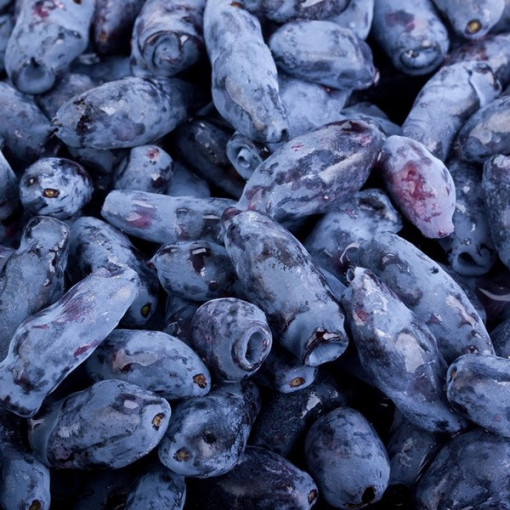
Ripening and fruiting – the first berries appear as early as mid-May. The fruits have a characteristic cylindrical shape and a dark navy-blue colour with a blue, waxy coating. Their flavour resembles wild forest blueberries – they are sweet and sour, juicy and tasty. Kamczadałka berries ripen unevenly, so they should be harvested regularly as they mature. Unpicked berries fall off.
Conditions and requirements – this variety requires sunny or lightly shaded positions. It is very tolerant of soil types. It grows on slightly acidic, neutral and even alkaline soils, though the first is preferred. It fruits abundantly when planted in well-drained sandy-loam soils.
Care – it is recommended to plant at least two different varieties next to each other to ensure proper pollination. This variety is extremely easy to grow, resistant to diseases and pests. It withstands very extreme conditions from severe frosts to long droughts. The Kamczadałka berry grows quickly, so its growth can be controlled by pruning branches in spring. Rejuvenation and thinning cuts are performed after 3–4 years.
Use – thanks to the vitamins and anthocyanins they contain, the fruits have antiseptic properties. They are recommended for circulatory system problems and atherosclerosis. They contain vitamins C, A, iron, copper and iodine. They have a very beneficial effect on visual acuity. The fruits are excellent for desserts and preserves, and can also be frozen.