
- Not Available
Clearance Up to 30% Off
Flowering: Early (June). Small, light-yellow flowers; round leaves green in summer, yellow in autumn.
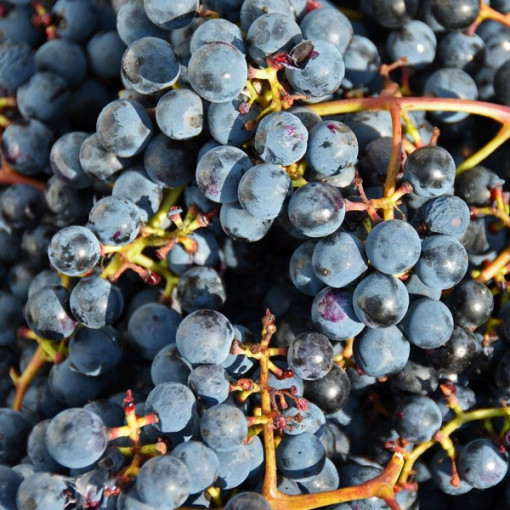
Ripening: Late. Harvest in early October when fully ripe. Medium–large, loose, conical clusters; round dark blue-purple berries with waxy bloom and red, juicy flesh.
Site & care: Sunny, wind-sheltered. Tolerates many soils; best fertile sandy-loam with moderate moisture, neutral–slightly acidic pH. Fast-growing, easy; short/medium spring pruning. Highly resistant to downy mildew, powdery mildew and grey mould. Frost-hardy to -35°C.
Use: Great for juices and homemade wines; deeply coloured, aromatic, with notes of red fruits and spices.
Flowering: The vine flowers early, in the first half of June. The flowers are small and light yellow. The leaves are medium-sized, round, resembling those of the fragrant grapevine. During the season they are intensely green, turning yellow in autumn.
Ripening and fruiting: A relatively late-ripening variety. Harvest can begin in the first half of October when the fruits are fully ripe or slightly overripe. Clusters are medium to large, loose, conical in shape. Berries are round, dark blue-purple with a delicate wax coating. The fruits have a high content of sugars and organic acids. The pulp is juicy with a deep red colour.
Conditions and requirements: Due to its ripening time, Frontenac requires well-sunny locations sheltered from wind. The variety is tolerant of soil types and can grow in almost any soil. However, the best soil is fertile, sandy-loamy, with moderate moisture. pH should range from neutral to slightly acidic.
Care: Despite its vigorous growth, Frontenac does not require special pruning techniques. The shrub grows evenly, so medium or short pruning is sufficient. Pruning is done in spring before flowering. The variety is exceptionally easy to cultivate and low-maintenance. It is highly resistant to downy mildew, powdery mildew and grey mould. Frost resistance is also high — it withstands temperatures down to -35°C and does not require winter protection.
Use: A processing variety. Suitable for juices and homemade wines. The wines produced have an intense colour due to the high content of red pigment and are rich in diverse aromas — from red fruits (cherry, blackberry), tobacco, dark chocolate and red pepper to white pepper.