
Clearance Up to 30% Off
This is a hybrid obtained with a large contribution of American grapevines, particularly the Labrusca variety. The bushes grow moderately strong, with an upright and regular shape. The shoots lignify early along their entire length, which makes them easy to guide, but they require stable support during periods of strong growth. This variety is characterized by very high resistance to frost and fungal diseases. Thanks to this, it is possible to cultivate the bushes without using chemical protection. A low-maintenance and tolerant variety, it adapts very well to the Polish climate. It prefers a sunny, warm location, sheltered from strong and cold winds. The best soil for the grapes is fertile, sandy-loamy, and slightly moist.
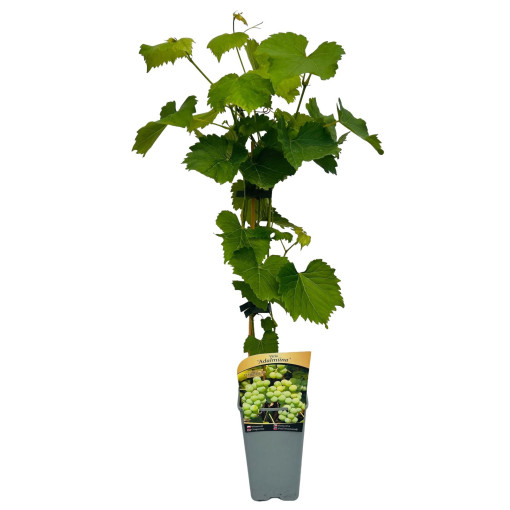
Blooming – an early flowering variety of grapevine. Small light flowers appear as early as May. Self-pollinating variety. The leaves are medium-sized, 3-lobed, slightly serrated with shallow side sinuses. In the summer season, they are intensely green, while in autumn, they turn a golden yellow color.
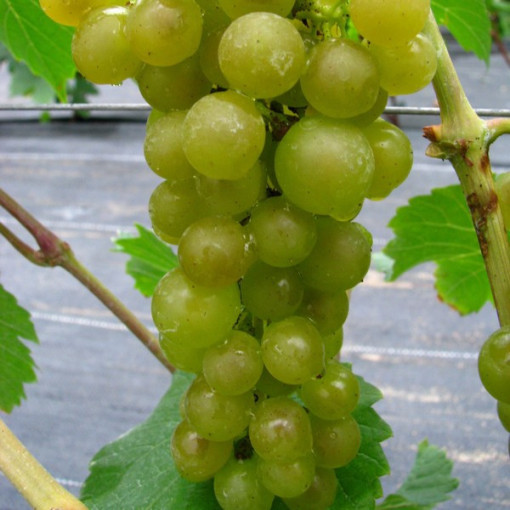
Maturation and fruiting – the Adalmiina grapevine ripens early in the first half of September. The clusters are medium-sized with loosely set large berries, weighing about 160g. The fruits are round with a light greenish-yellow skin. The flesh is delicate and sweet.
Conditions and requirements – the variety requires a sunny or possibly slightly shaded position. It is important that these sites are well sheltered from the wind. It is a tolerant plant with respect to the substrate. It is best planted in sandy soils with a moderate moisture content. It prefers soils with a neutral to slightly acidic pH.
Care – a moderately fast-growing variety, it does not tend to spread too vigorously, so it does not require specialized pruning. To ensure high-quality yields, the plants can be fertilized with a multi-component mineral fertilizer from April to June. Fertilization is recommended once a month until the first fruits begin to form. The Adalmiina grapevine creates extensive root systems and is resistant to lack of water. When planted in sandy soils, it requires regular watering during extended drought, especially when it coincides with the fruiting period. Special attention should be paid to young, freshly planted bushes in this case.
The Adalmiina variety is highly frost-resistant and withstands temperatures down to -35°C. However, for additional protection, young plants can be covered with a 30-centimeter mound of soil at the end of autumn, which will protect the roots and base of the vine.
Usage – the Adalmiina grapevine is a processing variety, meaning its fruits are used for wine production. The sweet fruits are an excellent addition to desserts and cakes. Wines from this variety are moderately extractive, refreshing, and slightly mineral. When fresh, they have citrus aromas such as grapefruit or lime. Over time, they develop the taste of ripe apple and pear.
Due to its high resistance and low requirements, it can be successfully grown both in professional vineyards and in home gardens.