
Clearance Up to 30% Off
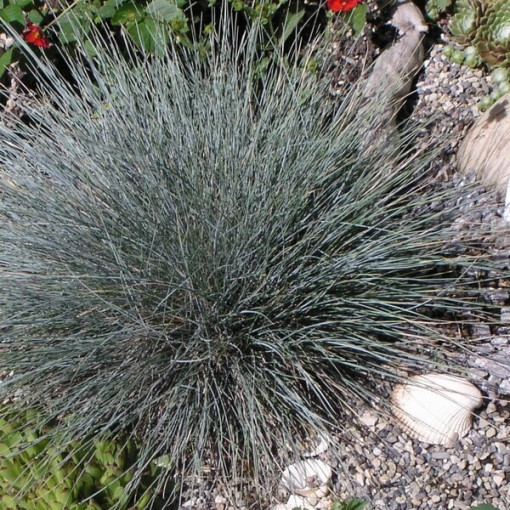
This variety grows into dense tufts of blue, narrow leaves. Their color remains throughout the year. The phenomenon of this species is that the harsher the conditions in which it grows, the more intense the blue coloration of the leaves becomes. This is due to a waxy coating on the leaves, which is a natural secretion that protects the species from harsh sunlight and water loss during dry periods. It is ideal for rock gardens, borders, and containers. It looks impressive in groups, maintaining a distance of 50–100 cm between clumps.
This variety grows into dense tufts of blue, narrow leaves. Their color remains throughout the year. The unique feature of this species is that the harsher the conditions it grows in, the more intense the blue coloration of the leaves becomes. This is due to a waxy coating on the leaves, which is a natural secretion that protects the plant from strong sunlight and water loss during dry periods.
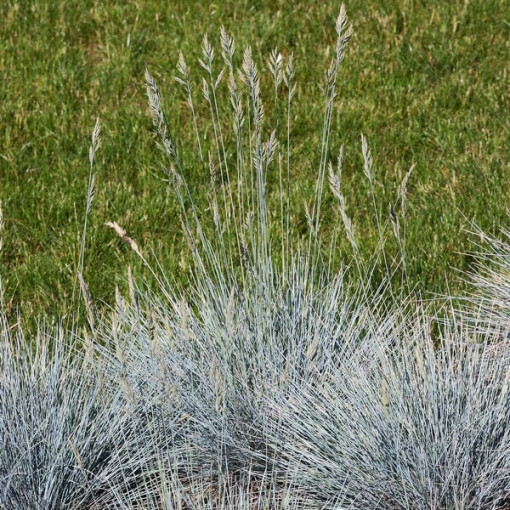
'Elijah Blue' fescue forms compact, dense clumps reaching 20–30 cm in height. The plant is completely undemanding regarding soil and poses no cultivation problems. It is resistant to pests, drought, and frost. Its most vibrant coloration is achieved in dry, sandy, and poor soils. To ensure the leaves color well, the grass should grow in light, sandy, and nutrient-poor soil. Fertilizing and watering are recommended only in the first year after planting, as this helps establish the clumps properly. In later periods, fertilization is not advised as it negatively affects the plant's coloration. To achieve the blue color, fescue must grow in a sunny location. After flowering, the blooms can be cut back.
It is perfect for rock gardens, borders, and containers. It looks impressive in groups, maintaining a spacing of 50–100 cm between clumps.