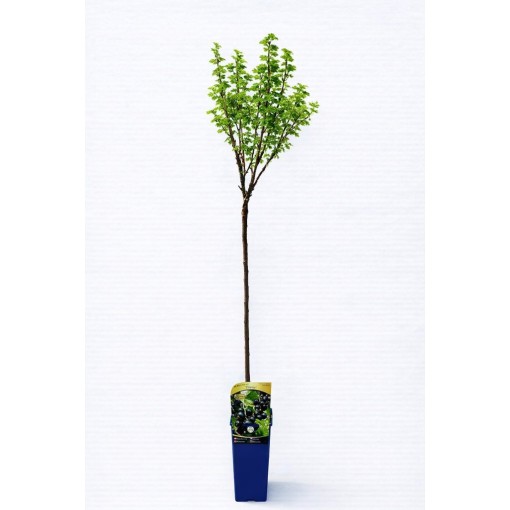
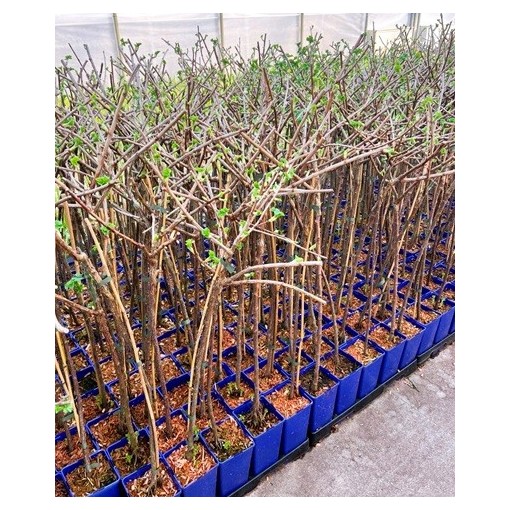
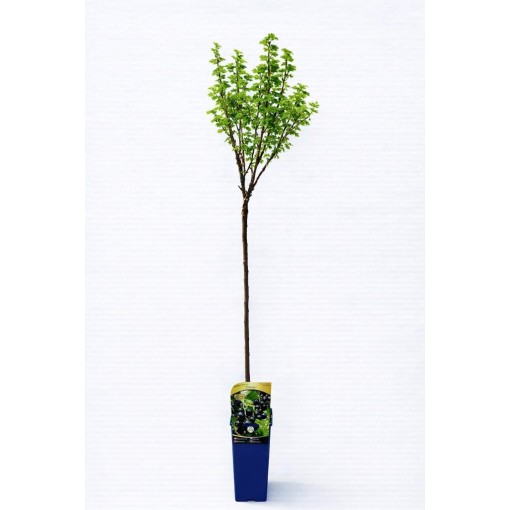
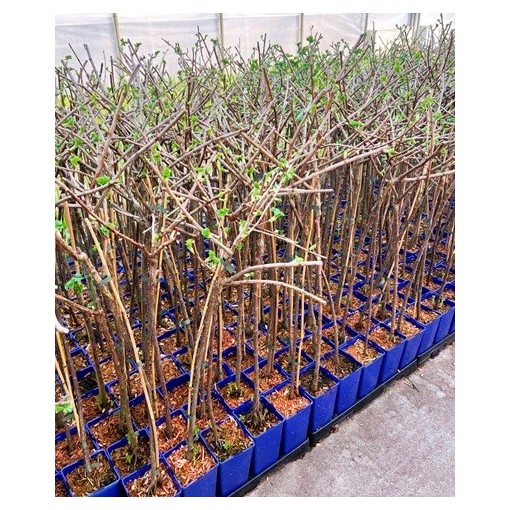
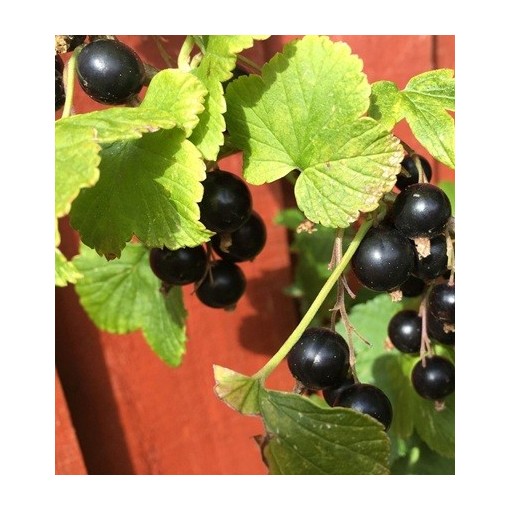
This is a very popular fruit shrub, often found in home gardens. It grows up to 2 m tall. Blackcurrant fruits contain more vitamin C than lemons, and even four times more than oranges!
Uses: The medicinal properties of blackcurrant are widely known. It is an excellent cleansing agent, inhibits the development of fungi, bacteria, and viruses. It strengthens the heart and lowers blood pressure. Blackcurrant fruits are suitable for fresh consumption as well as for preserves, juices, liqueurs, jams, and jellies.
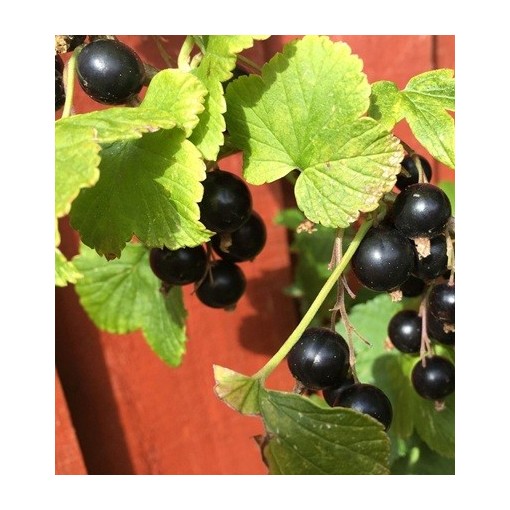
Flowering and fruiting: It flowers from late April to May. The fruits are black, spherical, and gathered in long clusters. It fruits in July. Blackcurrant fruits are very healthy, rich in vitamins C, P, B-group vitamins, provitamin A, biotin, and folic acid. They also contain mineral salts, potassium, iron, calcium, magnesium, and trace elements such as manganese, boron, and iodine.
Care: It grows well in almost any soil, in sunny to shady positions. The shrub should be planted deeper than it grew in the pot. Plant spacing: 1–1.5 m.
Pruning: After planting, cut the seedling back to 2–3 buds. This will produce 6–9 young shoots in the first year. In the following years, thin the shrub to avoid excessive density. White currant fruits mainly on short shoots, so good branching is essential. The best fruits appear on 2-, 3-, and 4-year-old skeletal branches. Do not cut one-year shoots; only remove old 5- and 6-year-old ones. For the first 5 years, shorten one-year shoots by half. Remove branches that overcrowd the shrub, cross, are weak, or lie on the ground. In the 6th year, in early spring or after harvest, remove the oldest 5-year shoots and replace them with the same number of one-year shoots, shortening them to encourage branching. The shrub should have 3–4 shoots of each age: one-, two-, three-, and four-year-old. Maintaining this balance is the key to abundant yields.