
- Not Available
Clearance Up to 30% Off
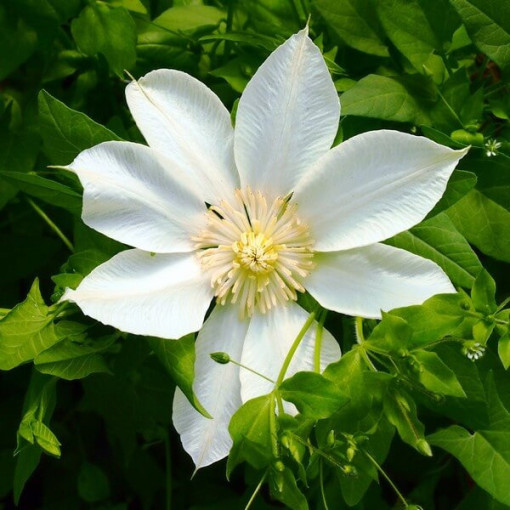
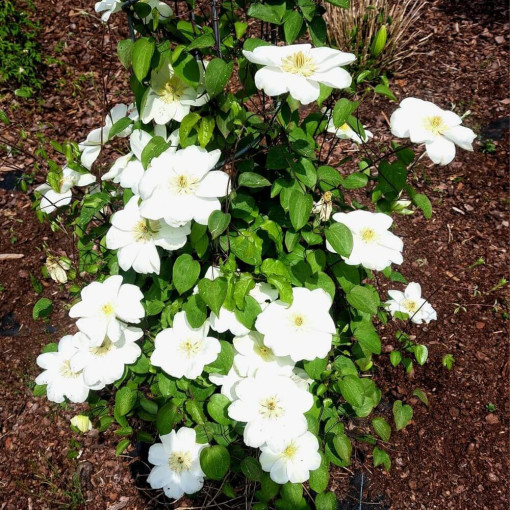
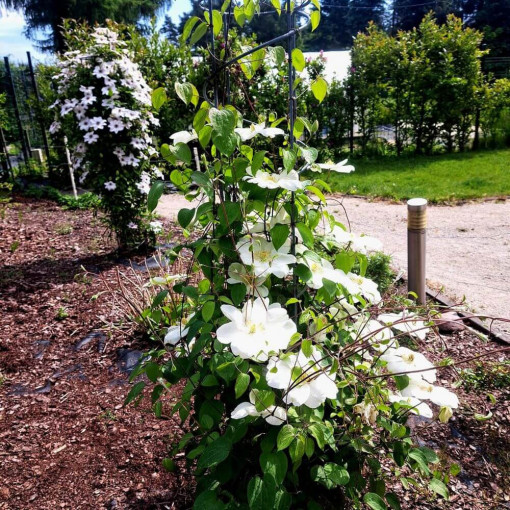
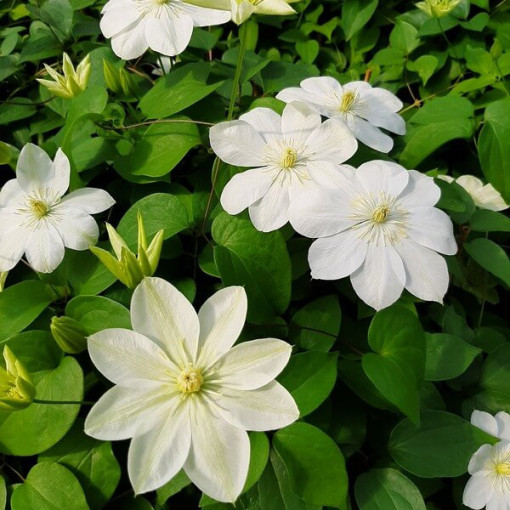
Very free-flowering variety from mid-May to July and again at the end of August. Flowers are initially pale yellow, turning white as they open. Looks best against a dark background. Suitable for containers. Moderately vigorous, grows up to 2 m. Ideal for arbors, pergolas, trellises, and fences. Prefers warm, sunny to semi-shaded, wind-sheltered locations. Soil should be fertile, humus-rich, moist, pH 6.0–7.0.
Large flowers, 12–15 cm in diameter, initially pale yellow, turning white as they open, with a greenish stripe down the center; composed of 8 overlapping sepals. Stamens have yellow anthers on white filaments. Leaves usually trifoliate. The vine climbs by using leaf stalks as tendrils.
Prefers semi-shaded positions, dislikes hot, sunny spots. In intense sunlight, flowering is shorter and blooms fade quickly. Thrives in fertile, moist, well-drained soils, but after enrichment tolerates most average soils. Soil pH should be neutral to slightly acidic. Hardy (zones 4–9).
Plant in a 60 x 60 x 60 cm hole with fertile soil and a 10 cm drainage layer at the bottom, 5–10 cm deeper than it grew in the pot. Requires light pruning: at the end of February or in March, remove dead stems, and lightly prune live ones – in the first year to 30 cm, in the second year to 70 cm, and in subsequent years to 150 cm. In mid-April, fertilize with a slow-release fertilizer (e.g., Osmocote 5–6M). Water regularly during the growing season.
Recommended for growing on trellises, stakes, and other garden supports. Looks best against a dark background. Suitable for container cultivation.