
- New
- Not Available
Clearance Up to 30% Off
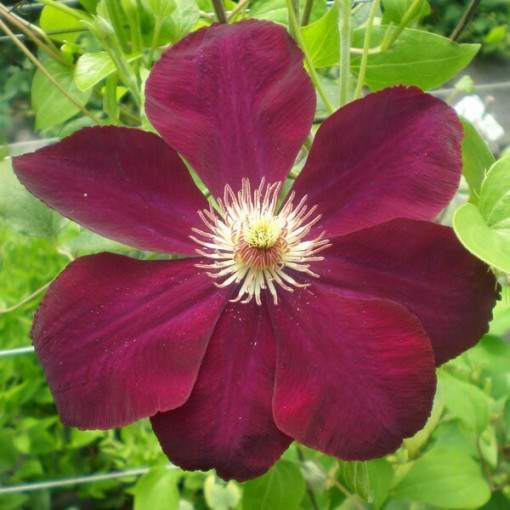
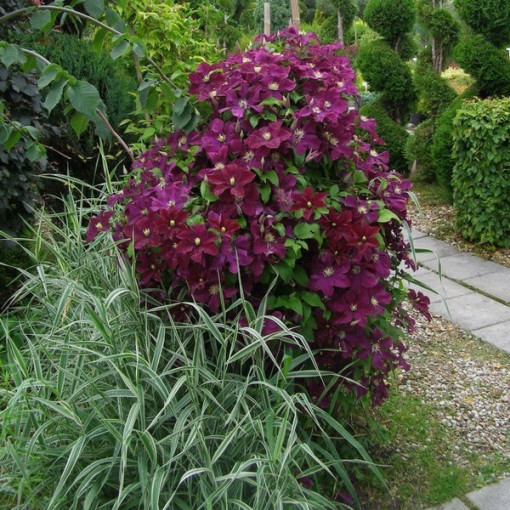
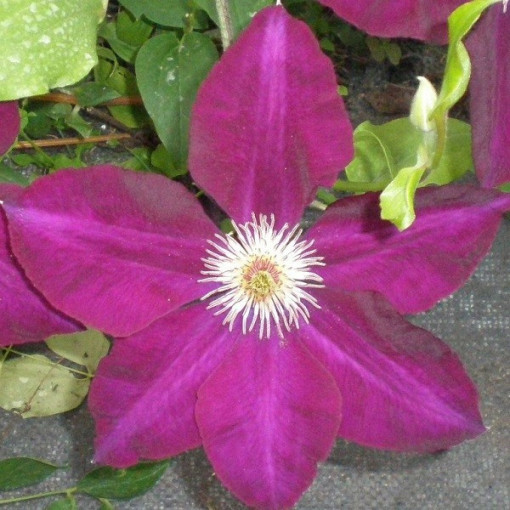
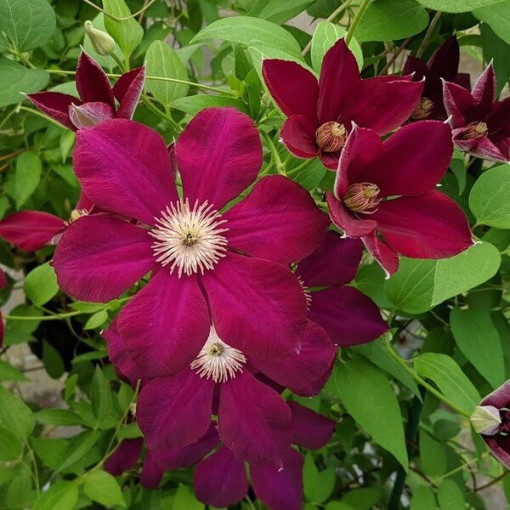
Polish variety from 2006. It won a silver medal at the "Zieleń To Życie" exhibition in 2006 in Warsaw. The flowers are burgundy, velvety, with a diameter of 15–20 cm and consist of 6 broad segments. It blooms from the end of June to September. It reaches a height of 2–3.5 m. It clings to supports with its leaf tendrils. It thrives best in well-ventilated areas. It does not like overly dry soil. It is ideal for growing along fences, gazebos, trellises, poles, and other garden supports. The soil should be fertile, rich in humus, well-draining, and moist (pH 6.0–7.0).
Application: It reaches a height of 2–3.5 m. It clings to supports with its leaf tendrils. It is suitable for growing along fences, gazebos, trellises, poles, and other garden supports.
Blooming: The flowers are burgundy in color, velvety, and measure 15–20 cm in diameter. They are borne on long stalks. The flowers are very well structured, with 6 broad segments and semicircular, coffee-colored stamens arranged on yellow filaments, which along with the yellow columns brighten the flowers. The segments on the underside have a whitish central stripe and pink edges. It blooms from the end of June to September.
Exposure: Suitable for any orientation.
Care: It thrives best in airy locations. It does not like soil that dries out. The soil must be fertile and moist. A slightly alkaline pH is beneficial.
Frost Resistance: In winter it is advisable to cover the base of the climber with a mound of leaves or needles, covered with soil to a height of 25–30 cm. In summer, it is best to water it 2–3 times per week.
Pruning: Since this variety blooms on last year’s shoots, prune at the turn of February and March by removing dead and diseased shoots, and lightly trim the healthy ones – in the first year after planting, cut about 30 cm above the strong buds; in the second year, about 70 cm; and in subsequent years, about 150 cm above the ground.