
Clearance Up to 30% Off
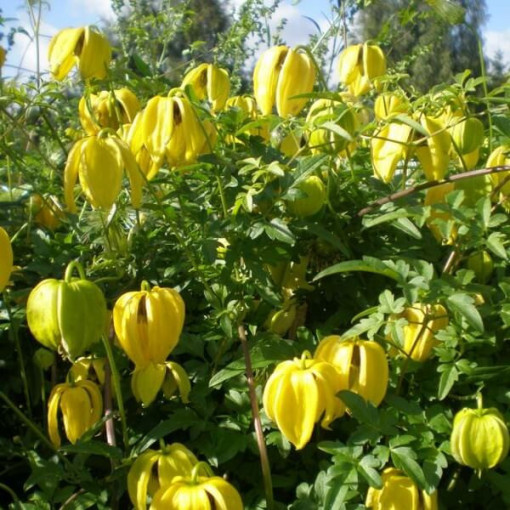
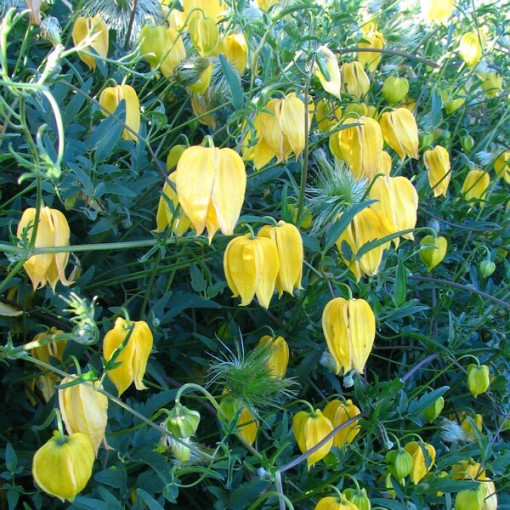
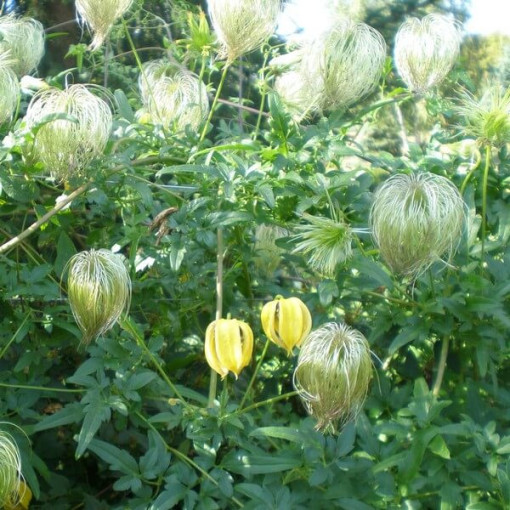
A very early, long and abundantly blooming botanical variety with charming semi-double, yellow flowers with a diameter of 6-8 cm, and light yellow stamens. From June to autumn, its decoration consists of fanciful, fluffy, light seed heads. It does not like heavy, clay soil or overly light soil. The soil should be fertile, humus-rich, well-drained, moist, pH 6.0-7.0. It prefers a sunny, wind-sheltered position. It is a completely frost-resistant plant.
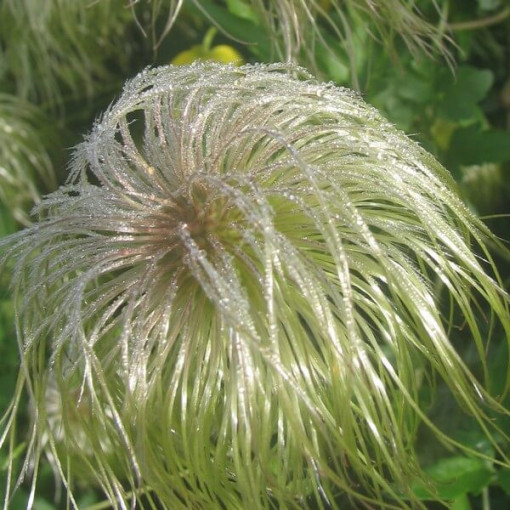
A very early, long and abundantly blooming botanical variety with charming semi-double, yellow flowers with a diameter of 6-8 cm, with light yellow stamens. From June to autumn, its decoration consists of fanciful, fluffy, light seed heads. A variety developed in Sweden from the crossing of Clematis Faurieri and Clematis Sibrica. The plant looks beautiful both in the garden and in pots on the balcony or terrace, it is very resistant to diseases and frost.
Usage: It climbs wonderfully on pergolas, fences, walls, gazebos, trellises, and natural supports such as coniferous and deciduous trees, shrubs, and small bushes. It looks great as a groundcover plant.
Flowering: From April to the end of May, and again after flowering, it leaves decorative flower heads, pods.
Exposure: Any.
Care: Plant the clematis 10 cm deeper than it was in the pot and at least 30 cm from other plants or walls. Mulch the soil around the seedling with bark. Shade the base, for example, with low shrubs, and before winter, cover it with bark to a height of 10-20 cm. It grows best in fertile, humus-rich, calcium-rich (pH 6-7), and well-drained soils. Fertilize from April and water intensively during the growing season.