
- Not Available
Clearance Up to 30% Off
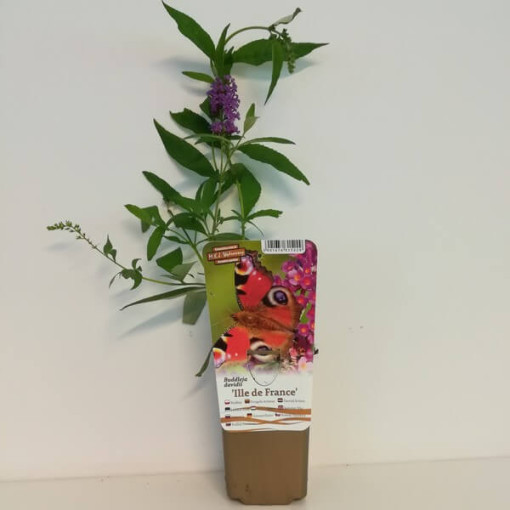
Grows up to 2.5 meters in height. Shrubs of this variety are dense, with lanceolate leaves 10–20 cm long, dark green and covered with white felt underneath. Their shoots gently spread to the sides, and during flowering bend under the weight of the inflorescences, forming characteristic arches. A highly valuable variety due to its long flowering period, large flower clusters, and low cultivation requirements. It is not frost-hardy and should be protected for winter. Prefers warm, sunny, and sheltered locations. Requires fertile, well-drained soil.
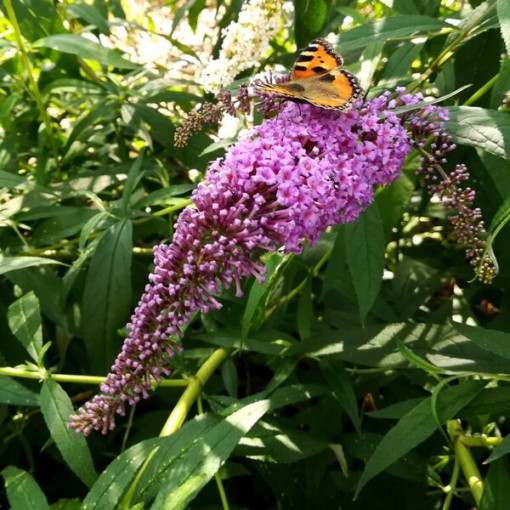
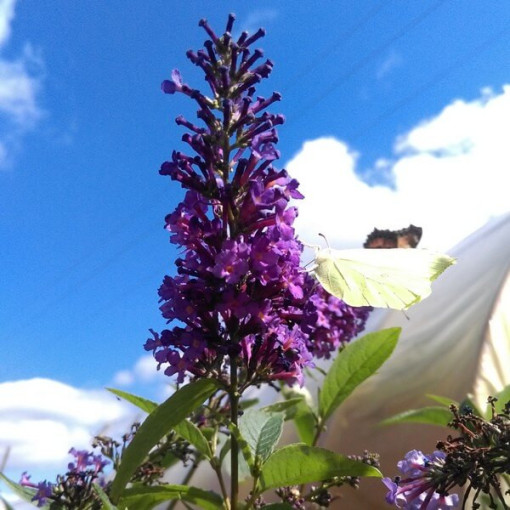
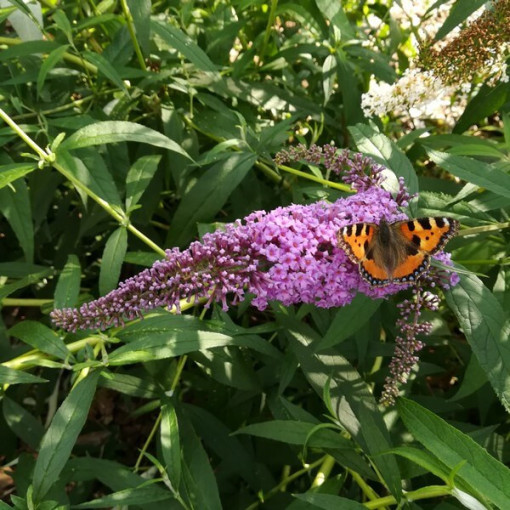
Flowering: Flower buds appear already at the end of June. Blooming continues from July until the end of September. The small purple flowers, resembling lilacs, are gathered in very showy, long, cone-shaped inflorescences up to 40–60 cm in length. The flowers open gradually—first on the main shoots, then on the side branches. Thanks to its strong fragrance, the shrub attracts insects, especially butterflies.
Fruiting: Not applicable.
Growing conditions: Buddleja davidii ‘Ile de France’ requires warm and sunny locations. It grows best in wind-sheltered spots. Plant in fertile, well-drained soil with a neutral or slightly acidic pH.
Care: Do not water too abundantly, as the roots are sensitive to lack of air. However, watering is advisable during dry periods. This variety is frost-sensitive, so in late autumn, cover the base of the shrub with pine bark or leaves for winter protection. In spring, prune low to the ground and fertilize with a nitrogen-rich fertilizer. This encourages new shoots, maintains the shape of the shrub, and promotes abundant flowering. To prolong blooming, regularly remove faded flowers.
Use: Due to its lush flowering, Buddleja looks great in exposed locations. It can be planted individually or in groups. It is resistant to pollution, making it suitable for urban greenery.