
Clearance Up to 30% Off
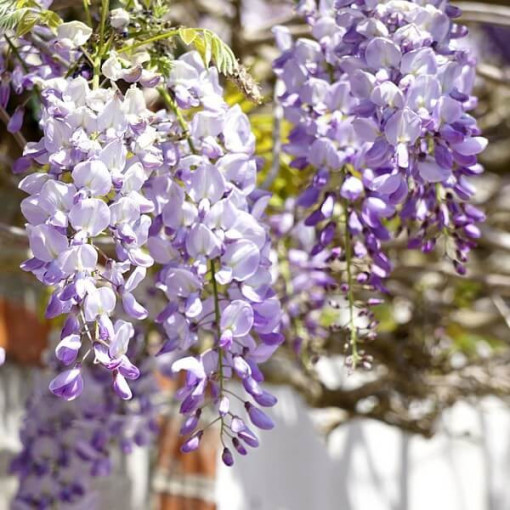
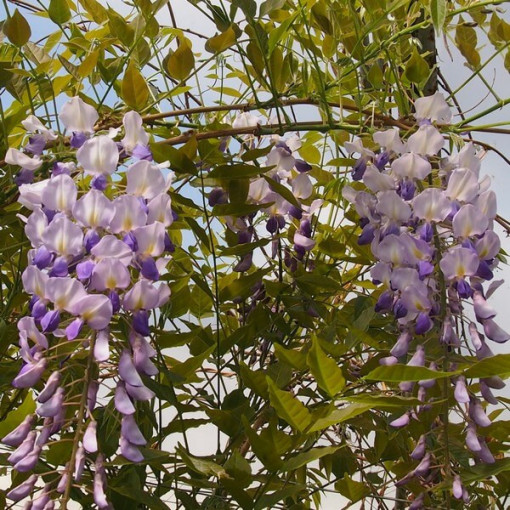
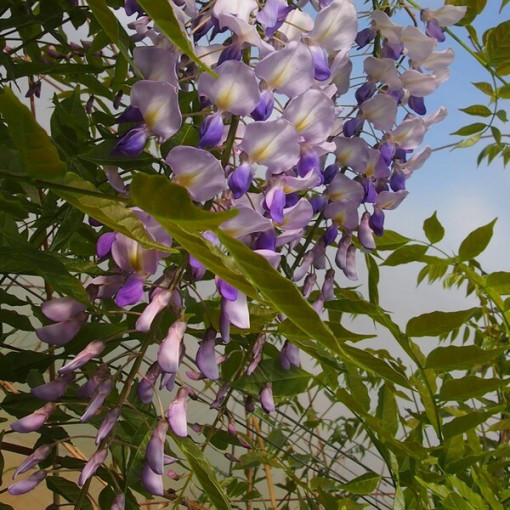
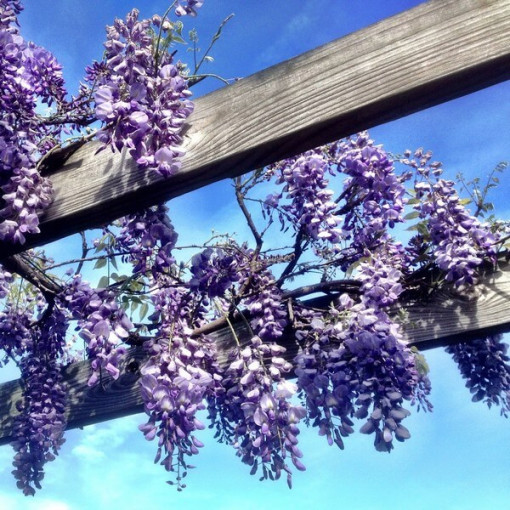
A beautifully flowering climber with blue-violet flowers gathered in long clusters (up to 60 cm). Wisteria grows slowly for 2-3 years after planting and requires particularly careful care and winter protection. Later, it grows vigorously, producing 1-3 m of growth annually, reaching a height of 10 m or more. Wisteria grows well and thrives in fertile, humus-rich, slightly permeable, and deep soil. It prefers a warm, sunny location, sheltered from strong and cold winds.
A beautifully flowering climber with blue-violet flowers gathered in long clusters (up to 60 cm). Wisteria grows slowly for 2-3 years after planting and requires particularly careful care and winter protection. Later, it grows vigorously, producing 1-3 m of growth annually, reaching a height of 10 m or more. The shoots wrap around supports. The roots of old specimens can spread over a radius of several meters.
Flowering: It blooms in May. A vegetatively propagated seedling begins to bloom in the 2nd-7th year and blooms very profusely.
Care: It grows and blooms best in sheltered, warm, and sunny locations, in moderately fertile and moderately moist soil.
Pruning: Pruning wisteria will accelerate its flowering and limit its growth. During the first 2-3 years after planting, allow wisteria to grow freely to strengthen it. Then prune it heavily to force the formation of flower buds. Buds are formed in early autumn, so the main pruning is done in summer (end of July), cutting most new shoots above the 4th leaf while leaving unpruned only the shoots needed to direct the plant's growth. In early spring, pruning can be adjusted by cutting very thin shoots and leaving only 2-3 buds on lateral shoots. The cuts should be sealed with a paste for securing cut trees. Root pruning also accelerates flowering, which may induce blooming in the next year. Roots should be pruned in spring (March) by driving a spade as deep as possible around the plant at a distance of 1-2 m from it.