
- Not Available
Clearance Up to 30% Off
An American-origin variety that produces exceptionally abundant yields, created by crossing the black blackberry with the red raspberry. The fruits ripen in the second half of July and have a matte red color. A single shrub can produce up to 2.6 kg of fruit, suitable for fresh consumption or processing. The loganberry requires fertile, moist soil with a slightly acidic pH (6.0–6.5). It grows poorly in heavy, clayey, or waterlogged soils, as well as in dry, sandy soils.
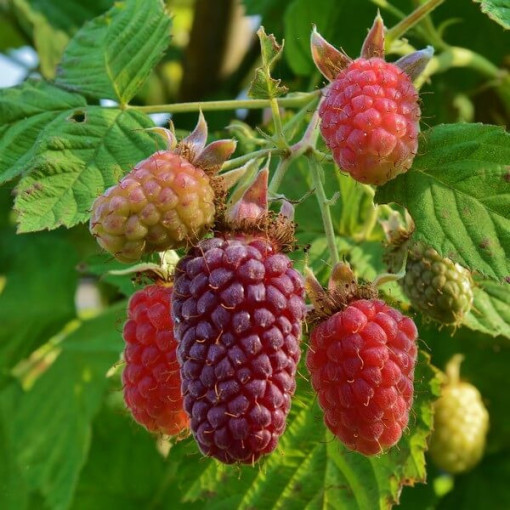
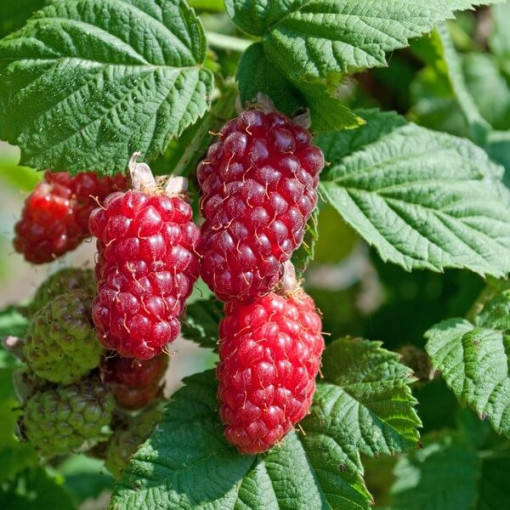
The loganberry, as the name suggests, is a hybrid between a raspberry and a blackberry. The shrub grows 3–4 meters tall and produces very large, dark burgundy fruits. Originating from America, this highly productive variety is a cross between the black blackberry and the red raspberry. The fruits ripen in the second half of July and have a matte red color. A single shrub can yield up to 2.6 kg of fruit, which can be eaten fresh or used for preserves. This variety is distinguished by its exceptionally abundant fruiting.
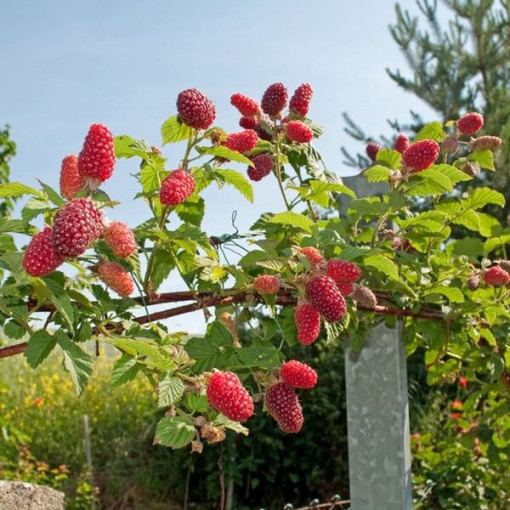
Uses: The loganberry is frost hardy and resistant to diseases and pests. However, winter protection is recommended, as it promotes faster growth and better yields. The plant requires support; otherwise, its long shoots will trail along the ground.
Flowering and fruiting: The fruits are very sweet and flavorful, similar in taste to blackberries. A single berry can reach 6 cm in length and 2 cm in diameter. They ripen from late July to early August. The long shoots are covered with thorns. The plant fruits on two‑year‑old canes. Flowering occurs in June.
Care: It is best to cover the plant for winter. It prefers a sunny, warm location. The soil should be moist, humus‑rich, and well‑drained. Planting is possible from early spring to autumn. In the first year, the plant should be hilled to protect it from winter frost. A spacing of 2–3 meters between plants is recommended.
Pruning: