
- Not Available
Clearance Up to 30% Off
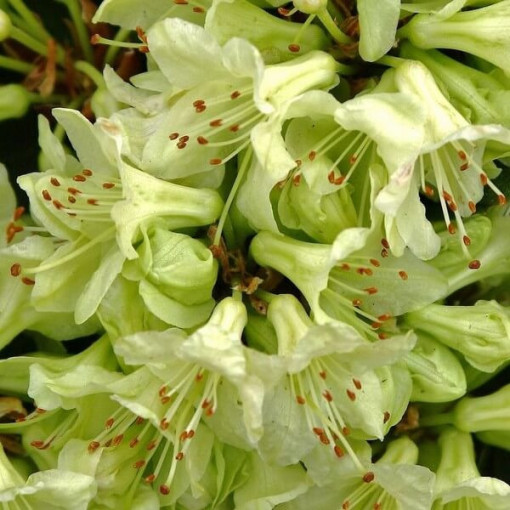
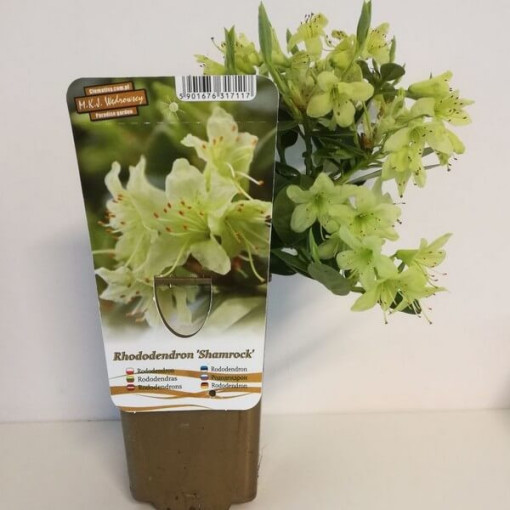
A beautiful dwarf rhododendron with yellow-green flowers gathered in abundant inflorescences of 8 to 10. It is resistant to pollution and looks wonderful in rock gardens. Rhododendrons should be planted in slightly shaded, wind-protected places. They should be planted in acidic, humus-rich, and well-draining soil. Rhododendrons are planted in spring and should be watered regularly.
Blooming: Colorful flower clusters appear at the tips of the shoots. The individual flowers have a bell shape and are yellow-white in color. The leaves are large, leathery, and glossy. They do not fall off in winter, decorating the shrub throughout the year. During frosts, the leaves curl into a tube. Depending on the variety, blooming occurs in April, May, and early June. After blooming, it is important to remove the forming seed heads as soon as possible.
Cultivation: The shrub is quite easy to grow but has some specific needs that require attention. Rhododendrons are somewhat sensitive to frost, so it is recommended to cover them with conifer branches in winter, and in colder regions, cover them with straw mats. The best time to plant rhododendrons is spring; from March to mid-May, but plants in containers can be planted until autumn. When planting, it is beneficial to add a sufficient amount of peat to the soil. They prefer humid air and moderate temperatures with minimal fluctuations. The shrubs do not require pruning, only removing damaged branches. However, it is important to remove faded flower heads as the fruit weakens the plant.
Soil: Rhododendron shrubs belong to the heath family, so they prefer loose, sandy-humus, and acidic soil with moderate moisture. A good addition to the soil under rhododendrons is oak leaves, beech leaves, or composted conifer needles. The roots of rhododendrons are delicate and shallow, so it is best to mulch the soil under the shrub with pine bark to prevent other plants from taking their water.
Position: Sheltered and protected from the wind. They prefer semi-shade or even shaded areas. It is best to plant rhododendrons in groups, as they create a favorable microclimate for themselves. These shrubs should not be planted near walls, as the soil may contain lime residues, which they dislike.
Use: For gardens; when planted in groups, they look very impressive. They are best displayed against the backdrop of trees and coniferous shrubs. They can also be planted under large trees.