
- Not Available
Clearance Up to 30% Off
The narrow-leaved oleaster is a tall shrub or small tree reaching up to 8 meters in height. It occurs in Asia Minor, Western and Central Asia as far as the Himalayas. It is also cultivated in Western Europe and England. It is an undemanding plant, resistant to various weather conditions. It has no special soil requirements. It prefers soil that is well-drained and slightly moist, but it also grows well in dry, sandy soils.
The narrow-leaved oleaster is a tall shrub or a small tree. It grows up to 8 meters high. It occurs in Asia Minor, Western and Central Asia, reaching the Himalayas. It is also cultivated in Western Europe and England.
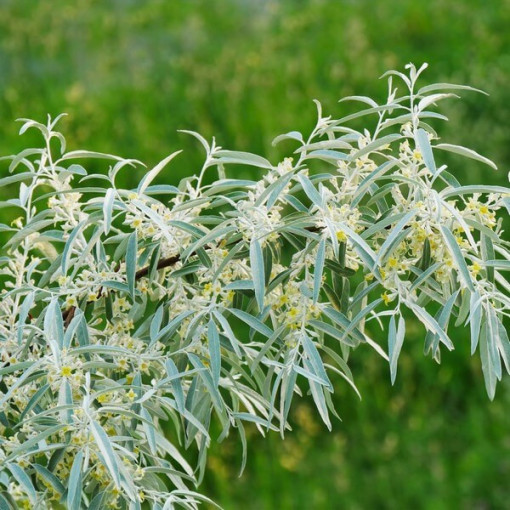
Uses: It is a honey-producing plant. It shows great resistance to drought, low temperatures, air pollution and soil salinity. Due to its attractive shape, silver foliage and fragrant flowers, it is used in parks and gardens. When planted in rows, it forms dense, tall hedges, making it suitable for lining roads.
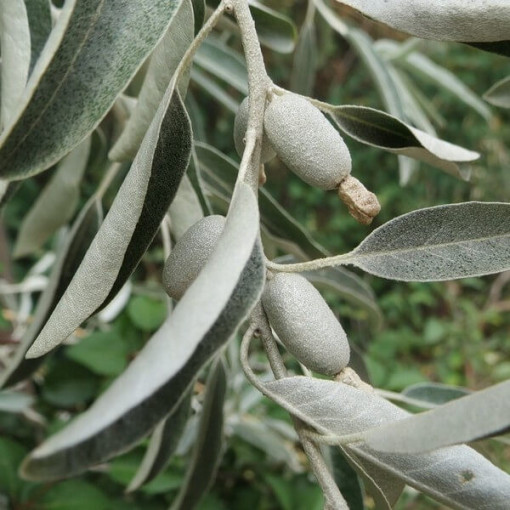
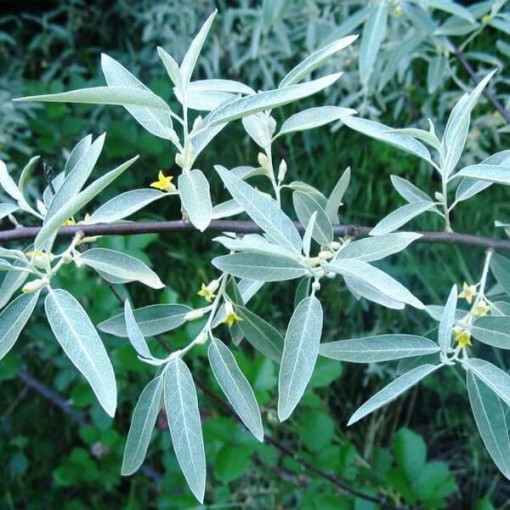
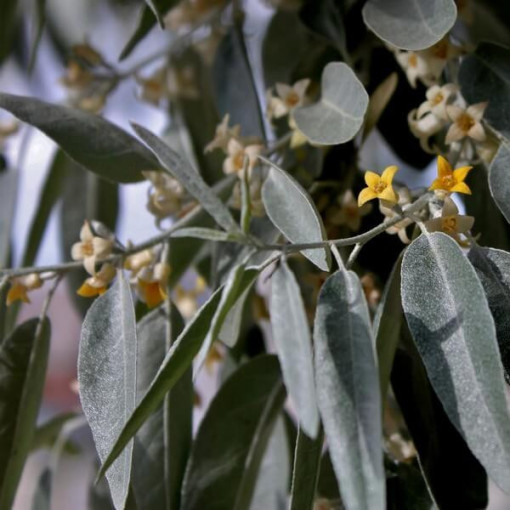
Flowering and fruiting: The leaves are alternate, lanceolate, up to 5 cm long, silver-gray up to 10 cm long, falling off in winter. The flowers are petal-less, radial, tubular, strongly and pleasantly fragrant, yellow inside and silver-gray outside, arranged in groups of 2–3 in the leaf axils. It blooms in mid-June. The fruit is an edible, dry and mealy drupe, which remains on the branches for a very long time. It begins fruiting as early as 4–6 years of age.
Care: Not demanding in terms of soil. It grows well on dry, sandy, even stony and gravelly soils. It enriches the soil with nitrogen due to its symbiosis with soil bacteria. It is a highly light-demanding shrub and requires full sun. It is very resistant to high air temperatures and low air humidity (a plant of steppe and desert areas).
Pruning: It tolerates pruning well and can be used for hedges. It does not require regular pruning except for removing overly vigorous and unnecessary shoots in spring.