
Clearance Up to 30% Off
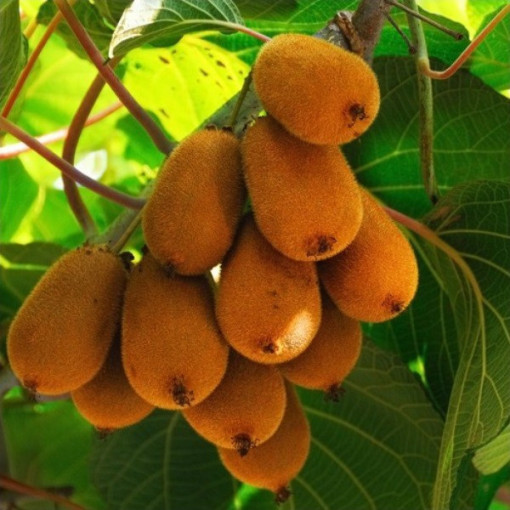
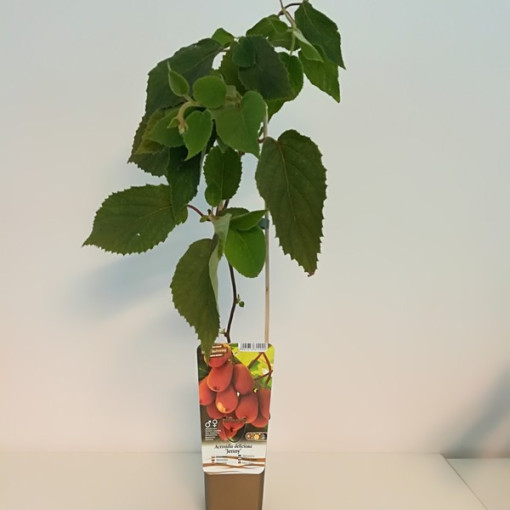
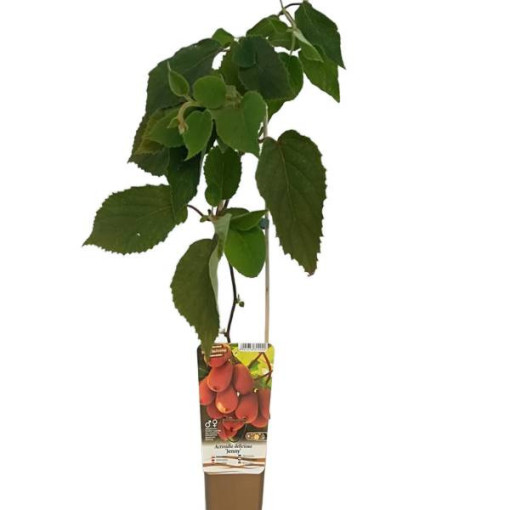
Jenny kiwi is a climber originating from New Zealand. It produces tasty fruits that ripen at the end of September. Kiwi Jenny is rich in vitamin C. This plant is frost-resistant and very productive. It is suitable for planting near arbours, pergolas, or in a winter garden. This variety does not require a pollinator as it is hermaphroditic. Jenny fruits very late – only in November. The fruits are small but tasty. The best time to plant mini kiwi is in late spring or autumn, but no later than mid-October. Young plants should be protected from frost.
Jenny kiwi is a climber originating from New Zealand. It produces tasty fruits that ripen at the end of September. Jenny is rich in vitamin C and is a very productive variety. It is suitable for planting near arbours, pergolas, or in a winter garden. Initially requires support after planting. This is a hermaphroditic variety, SELF-FERTILE. It grows up to 5–6 m in European climates.
Use: Jenny is a climber ideal for planting near pergolas, arbours, etc. Requires support structures. It is a variety with fragrant flowers and tasty fruits.
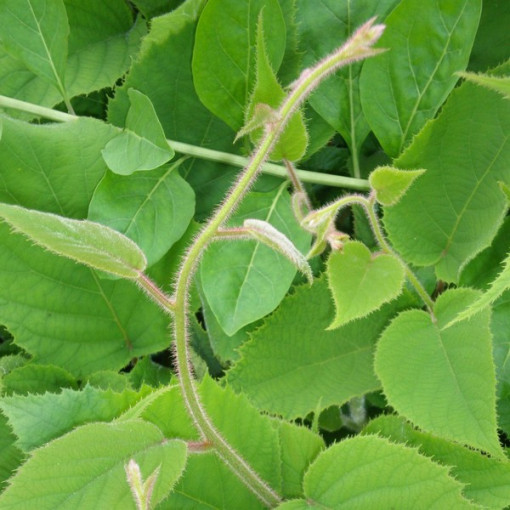
Fruiting and flowering: Fruits ripen between late September and October. They are brown when ripe, about 5–7 cm long. Jenny may fruit as early as the first year after planting. The leaves are dark green. It has white, fragrant flowers that bloom in June.
Care: Should be planted 3 m apart from the next plant. Requires soil pH of 5–6.5. Can be planted in regular garden soil. It is only slightly frost-resistant (down to -5°C). From the second year after planting, fertilize three times a year with nitrogen fertilizer. Requires a sunny location.
Pruning: Reaches 5–6 m, but can be pruned without concern. Remove branches older than 3 years, as they no longer bear fruit.