
- Not Available
Clearance Up to 30% Off
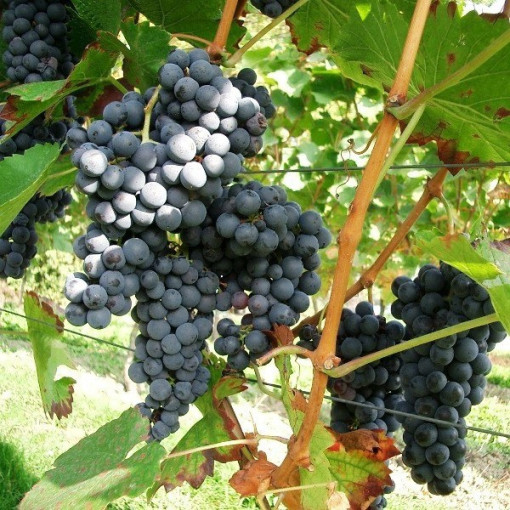
A pergola grape variety with large black-purple fruits, ripening at the end of September. It prefers sunny, southern exposures and fertile, well-drained, moderately moist soil. Very resistant to diseases and frost, with strong growth, ideal for pergolas and arbours.
A climbing plant from the grapevine family originating from the Caucasus, equipped with tendrils. Other names include grapevine and wine vine. The grapevine has been cultivated since about the 5th millennium BC in Asia Minor and from there spread to the Mediterranean region.
Use: A grapevine with dark clusters, containing a large amount of bioflavonoids, which neutralise free radicals in the body and help protect it against cancer and heart disease.
Flowering and fruiting: Flowers are small, gathered in clusters and fragrant. In Poland they appear from June to July. The clusters are medium-sized and compact. The flesh is jelly-like, with a characteristic Labrusca flavour and aroma.
Care: Plants can be planted in autumn from October until frost, and in spring after the soil has thawed until May. Use garden soil mixed half and half with compost or another fertile substrate. The vine usually reaches full yield about 4 years after planting. Fertilise the vine every year in autumn. Water during prolonged droughts, especially during fruit formation and when planted along building walls. Sometimes the vine may suffer from diseases; in home gardens it is recommended to use prevention instead of spraying whenever possible. For this purpose, remove diseased shoots and fallen leaves in autumn. It prefers a sunny, airy and warm position; the best is a southern exposure. It is good to plant the vine near a building wall or a wall on the northern or eastern side, from where cold winds blow. In the first years after planting, it is advisable to protect it for winter.
Pruning: For the first few years, winter pruning (January–February) is used to leave only fruiting shoots and thicken the main trunk. In later years, prune in early spring, removing old and weak shoots and leaving only a few of the strongest ones. In summer, shorten fruiting shoots after the 6th leaf counted from the cluster and also shorten shoots growing from the leaf axils of one-year shoots. In autumn, cut the canes to 2–3 buds and protect them against frost by covering with a mound of soil.