
Clearance Up to 30% Off
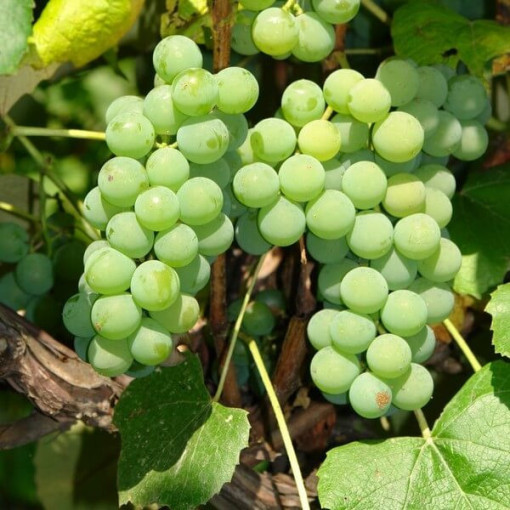
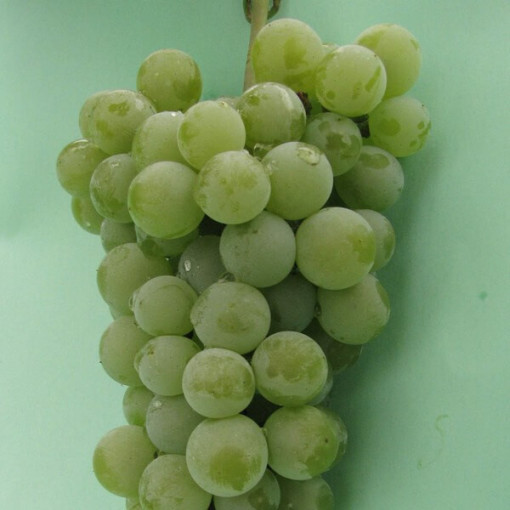
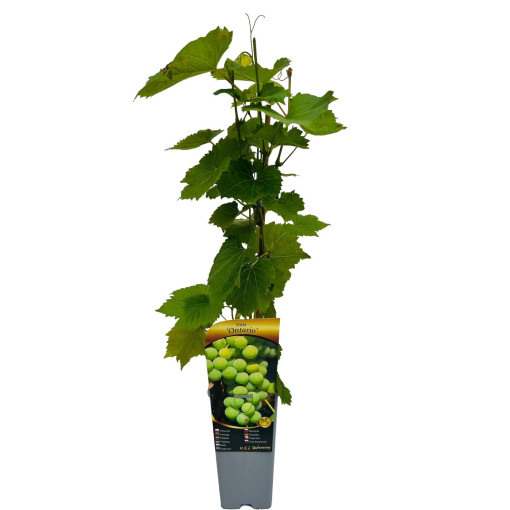
Very productive, sufficiently frost-resistant variety (up to -30°C), able to survive in our climatic conditions, it regenerates excellently after spring frosts. It produces reliably and regularly, with yellow, very sweet and juicy fruits that ripen early, often by the beginning of September. The clusters are large and long. The plant grows quickly and can be planted in an arbor or along a fence. It has high resistance to diseases, making it ideal for amateur cultivation. It prefers sunny, warm locations, sheltered from cold and strong winds. The best soil for grapes is fertile, sandy-loamy, and slightly moist.
Very productive, sufficiently frost-resistant variety (up to -30°C), able to survive in our climatic conditions, it regenerates excellently after spring frosts. It produces reliably and regularly, with yellow, very sweet and juicy fruits that ripen early, often by the beginning of September. The clusters are large and long. The plant grows quickly and can be planted in an arbor or along a fence. It has high resistance to diseases, making it ideal for amateur cultivation. It prefers sunny, warm locations, sheltered from cold and strong winds. The best soil for grapes is fertile, sandy-loamy, and slightly moist.
Growing conditions: sunny locations, fertile, calcareous, slightly moist soils. Plant 10-15 cm deeper than it grew in the pot, mound for winter. The grapevine is a climber that grows significantly if not pruned. It's best to prune the plants in November and cover the shoots with soil, bark, sawdust, or fleece up to a height of 30 cm before winter. In the first year, guide the cuttings on one or two shoots (cut to 1 or 2 buds). When pruning grapevines, remember that flower buds only form on one-year-old shoots. Older shoots should be removed in May.