
- New
Clearance Up to 30% Off
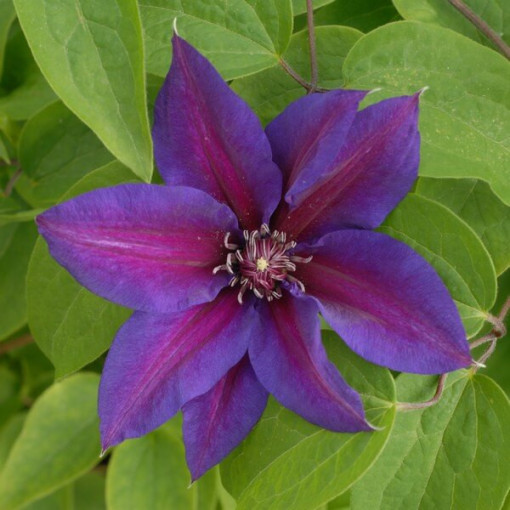
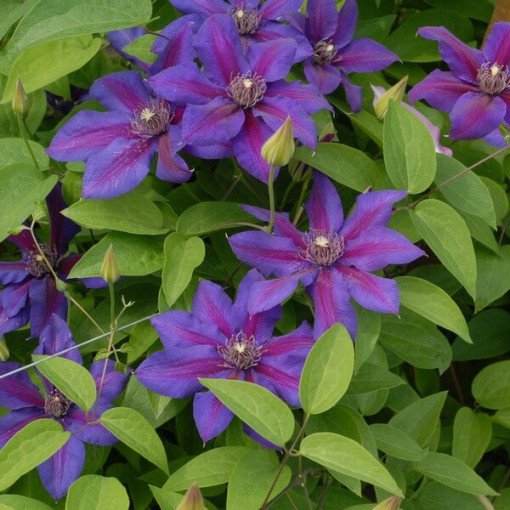
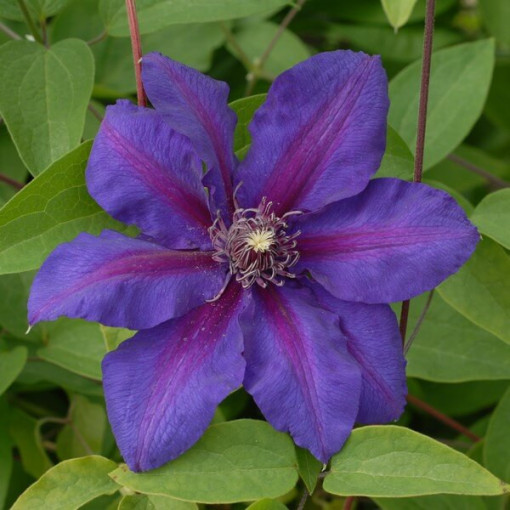
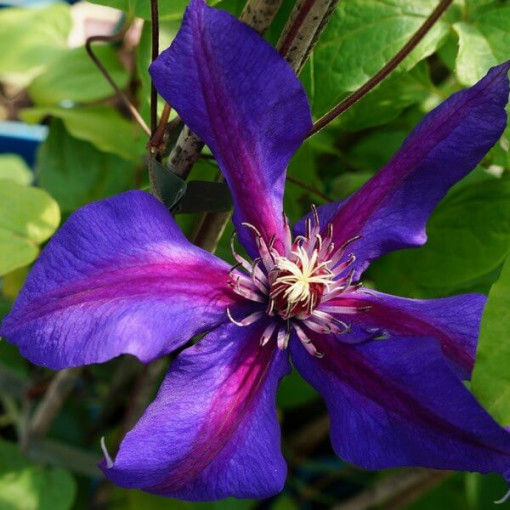
This is a lovely, hardy variety that reaches 2–2.5 m in height and blooms very abundantly, with large, interesting, two-toned blue flowers featuring a red stripe. The plant looks beautiful both in the garden on gazebos, pergolas, ladders, and fences as well as in pots on balconies or terraces. It is frost‑hardy and low‑maintenance. It prefers a sunny, warm location that is sheltered from strong, cold winds. It needs fertile, humus‑rich, well‑draining, and moist soil, with a pH of 6.0–7.0.
This is a magnificent, very original variety. It reaches a height of 2–2.5 m and produces full, deep blue‑violet flowers; there can be quite a variation in flowering, and individual flowers may appear during the summer–autumn bloom. The plant looks beautiful both in the garden and in pots on balconies or terraces; it is frost‑hardy and low‑maintenance, making it ideal for cultivation under Polish climatic conditions.
Application: It climbs wonderfully on pergolas, fences, walls, gazebos, trellises, and natural supports such as coniferous trees, deciduous trees, shrubs, and small bushes. It also grows excellently in large pots on balconies, terraces, and in small gardens.
Blooming: From May until the end of August.
Exposure: Suitable for any orientation.
Care: Plant the clematis 5 cm deeper than it grew in the pot and at least 30 cm away from other plants or walls. Mulch the soil around the plant with bark. Provide some shade for the base using, for example, low‑growing shrubs, and before winter cover the base with bark up to a height of 10–20 cm. It grows best in fertile, humus‑rich, well‑draining soils that are rich in calcium (pH 6.0–7.0) and airy. Begin fertilizing in April and water intensively during the growing season.
Pruning: Since this variety blooms on last year’s shoots, prune at the turn of February and March by removing dead and diseased shoots and lightly trimming the healthy ones – in the first year after planting, cut about 30 cm above the strong buds; in the second year, about 70 cm; and in subsequent years, about 150 cm above the ground.