
- Not Available
Clearance Up to 30% Off
Highbush blueberry ‘Toro’ is a very valuable cultivar. It is a medium-early ripening fruit shrub producing berries with high dietary value and low calories. The position should be sunny and sheltered from the wind, and the soil should be well-drained. Blueberry prefers acidic soil. It likes moisture but does not tolerate waterlogging.
Highbush blueberry ‘Toro’ is a very valuable cultivar. It is a medium-early ripening fruit shrub producing berries with high dietary value and low calories. Due to its firm skin, it is well-suited for transport and tolerates it well, even over long distances. It bears fruit abundantly, is frost-resistant, and has minimal site requirements. One cup of fresh blueberries covers an adult's daily requirement for vitamin C.
Use: It has very tasty sweet-wine flavored fruits, recommended to be eaten raw due to their content of pectins, minerals, and vitamins beneficial in the prevention and treatment of digestive, heart, and eye diseases. It is frost-resistant from -28°C to -34°C. Only frost during flowering (down to -7°C) may reduce yields. Growth is moderately vigorous, reaching a height of 160–200 cm.
Flowering: Medium-sized urn-shaped flowers. Petals of unopened flowers are tinged pink; older ones are whitish. Calyx lobes are pink and cling to the petals. Pedicels are thin and medium in length, often pink. Leaves are lanceolate, elongated, strongly veined—young ones with a pink hue, older ones deep green.
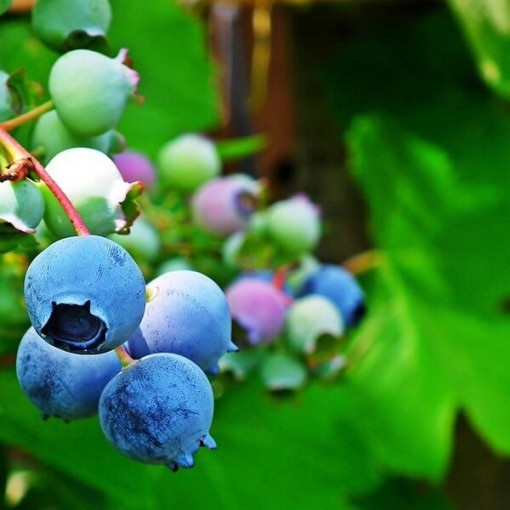
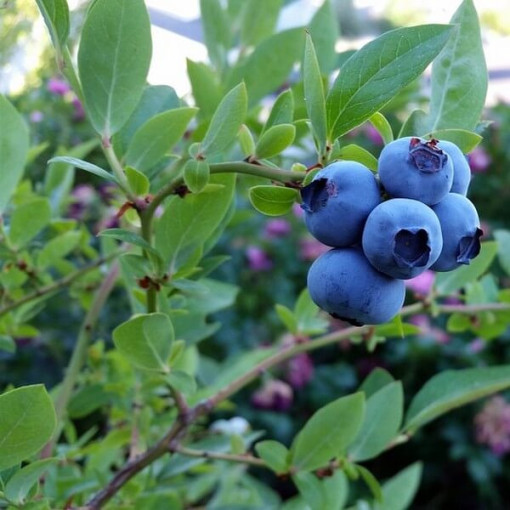
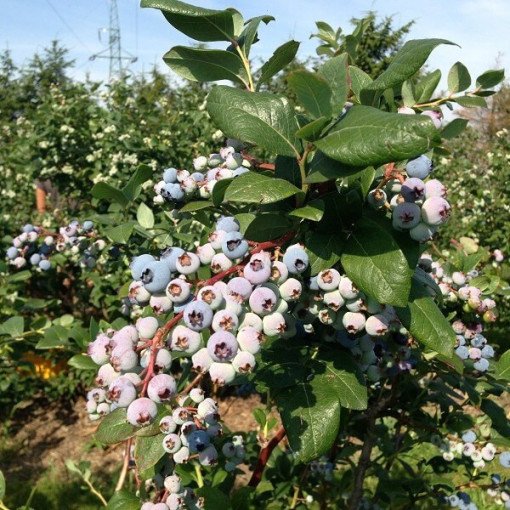
Ripening and fruiting: Medium-early ripening variety. In central Poland, fruits ripen at the end of August and the first ten days of September. Berries are large, round, often flattened, gathered in large, loose, uniform clusters. Light blue with a strong waxy bloom. Flesh is greenish-yellow, slightly pink under the skin, firm, mildly aromatic, wine-sweet, very tasty. Overripe fruits may fall. Abundant fruiting can reduce berry size, so strong post-harvest pruning is recommended. Branches heavy with fruit should be tied up. The thick skin may occasionally crack during long rains.
Exposure: Sites that promote soil warming to 18–21°C are recommended.
Care: Requires acidic, humus-rich, airy, well-drained soil with constant moisture.
Pruning: For the first few years after planting, remove diseased, weak, broken shoots and shorten the new growth.