
Clearance Up to 30% Off
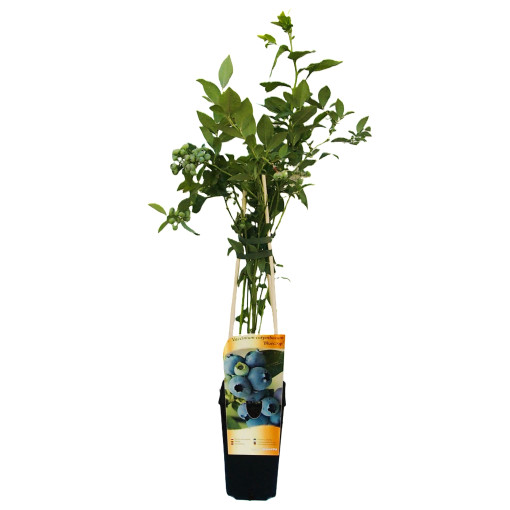
The American Blueberry Bluecrop is considered the most valuable and the most commonly planted variety in the world. The highbush blueberry is a medium-early maturing fruit shrub, producing berries with high dietary value and low calorie content. The position should be sunny, sheltered from the wind, and the soil should be permeable. Blueberries prefer acidic soil. Blueberries like plenty of moisture but do not tolerate waterlogging.
The American Blueberry Bluecrop is considered the most valuable and the most commonly planted variety in the world. The highbush blueberry Bluecrop is a medium-early maturing fruit shrub, producing berries with high dietary value and low calorie content. Due to its strong skin, it is excellent for transport and tolerates it well, even over long distances. It bears fruit abundantly, is frost-resistant, and has the lowest habitat requirements. A glass of fresh blueberries covers the daily vitamin C needs of an adult person.
Use: It has very tasty sweet-sour fruits, which are recommended to be eaten raw, especially because of the content of pectin, minerals, and vitamins recommended for the prevention and treatment of foodborne diseases, heart, and eye diseases. It is frost-resistant from -28°C to -34°C, but a temperature drop to -7°C during flowering may reduce yields. Growth is medium-strong, with plants reaching a height of 160-200 cm.
Blooming: The flowers are medium-sized, bell-shaped, with crown petals of undeveloped flowers having a pinkish tint, older ones are whitish, the calyx lobes are pink, adhering to the crown petals, the pedicels are thin and of medium length, most often with a pinkish tint. The leaves are lanceolate, elongated, strongly veined, with young leaves showing a distinct pinkish hue, and older ones being intensely green.
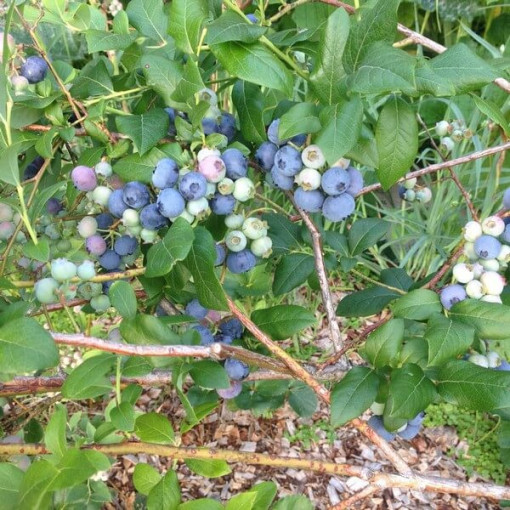
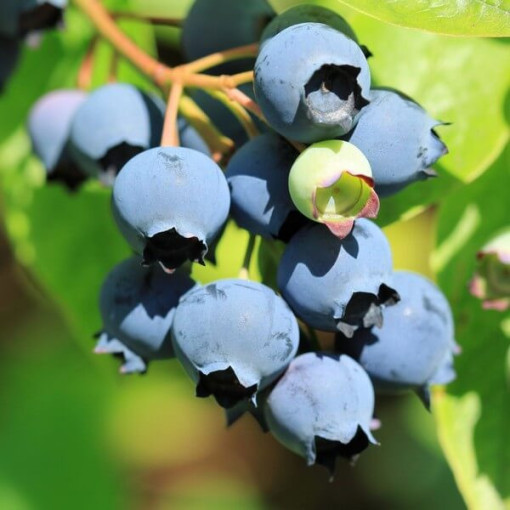
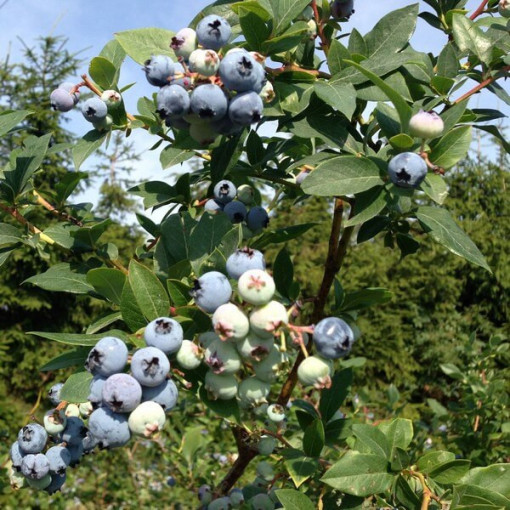
Maturation and fruiting: The variety has a medium maturation period, which in the central part of the country occurs at the end of July and the first decade of August. The fruits are large, round, often flattened, gathered in large, loose, evenly sized clusters, light blue with an intense waxy coating, the flesh is greenish-yellow, slightly pinkish under the skin, firm, moderately aromatic, winy-sweet, very tasty, overripe fruits fall off. Very abundant fruiting can cause smaller fruits, so it is recommended to prune the plants intensively after fruiting. The branches spreading under the weight of the fruits should be tied up. The strong skin of the fruits may occasionally crack during prolonged rainfalls.
Exposure: It is recommended to plant them in spots that allow the soil temperature to rise to 18-21°C.
Care: The soil should be acidic, rich in humus, airy, permeable, and have consistent moisture.
Pruning: For the next few years after planting, diseased, weak, broken shoots should be removed, and new growth should be shortened.